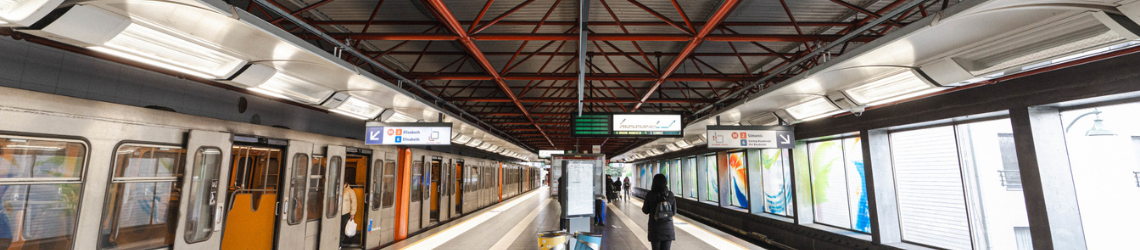
Stop for a story: Osseghem/Ossegem
The neighbourhood that switched tracks
Published on
Close your eyes and imagine... Where buildings now stand, there was once nothing but a dirt road. A few houses. Fields. And a small hamlet called Ossegem, whose name has survived through the centuries.
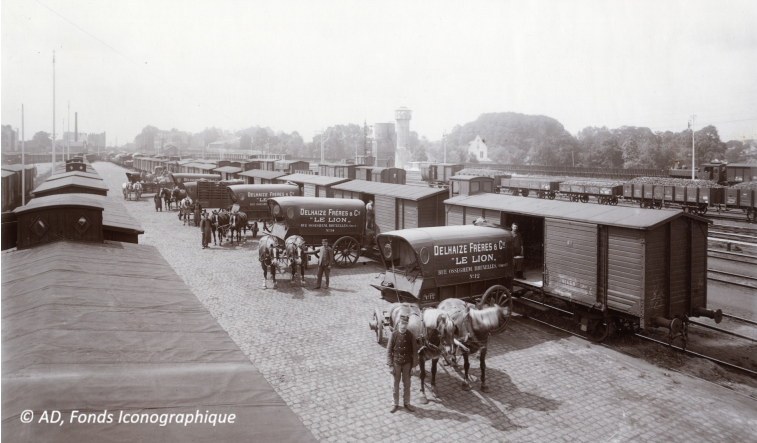
Then, at the end of the 19th century, everything changes. The railway arrives. And with it come warehouses, factories and workers. Delhaize sets up its headquarters and its distribution centres here.
The neighbourhood becomes a gateway for goods supplying Brussels and the rest of the country. Streets spring up around this activity. More and more homes follow.
From the 1960s onwards, industry gradually moves away, leaving behind vast stretches of disused railway land.
But passenger trains keep Ossegem on the move. And when the metro arrives in the 1980s, it creates a new connection with the city centre.
Today, Ossegem continues to change. Where freight trains once ran, trees and green spaces now grow.
This changing landscape makes room for the development of local projects. From community gardens to the new Park West. As if the old railway tracks were still, in their own way, laying the path for the neighbourhood’s future.
Curious for more?
Explore another stop and discover Brussels’ hidden gems. A stop, a story... and off again.

On the same subject
-
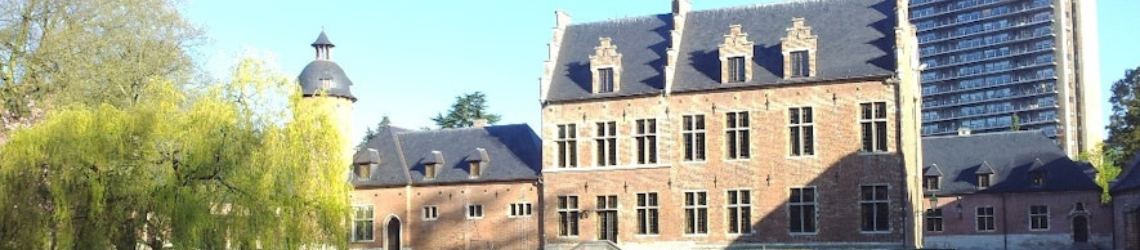
Stop for a story: Karreveld
Every stop has a story: which one lies behind Karreveld?
-
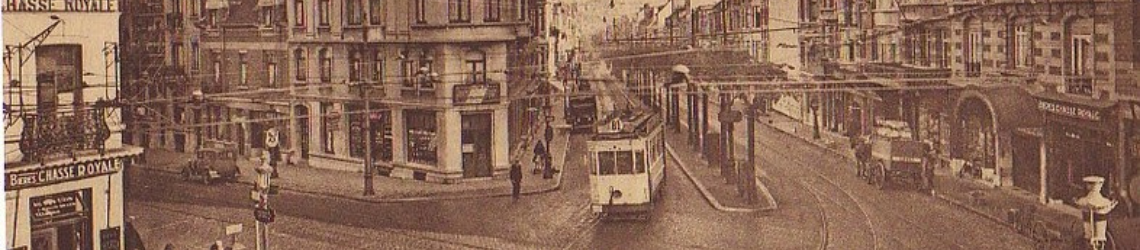
Stop for a story: La Chasse/De Jacht
Every stop has a story: which one lies behind La Chasse/De Jacht?