Responsibility
Social responsibility
Published on
STIB fulfils its role as a responsible urban stakeholder by continuing to improve the company's environmental performance and proactively contributing to Brussels' sustainability ambitions and challenges.
It plans to improve the accessibility of its services, promote diversity and foster inclusion and social cohesion, both within the company and with its customers.
It constantly monitors the safety of its passengers, staff, third parties and infrastructure.
Economic commitment
Participating in investments
During the period 2019-2028, € 6.2 billion of investment is planned for improving mobility in Brussels. For the most part, these large-scale investments will be financed by the annual allocations of investments awarded to STIB by the Brussels-Capital Region and the amounts allocated by the Federal government under the cooperation agreement with Beliris. As a responsible public company, STIB is also expected to help fund these investments, insofar as its resources allow, thanks to the implementation of a savings programme based on a principle of good governance and process optimisation.
Efficiency and productivity gains
6.2 billion in investments to promote mobility in Brussels between 2019 and 2028
In 2020, STIB launched a new programme to improve the company's operational efficiency and control its costs even better, while guaranteeing the quality of its customer service.
The effects of this programme will make it possible, on the one hand, to improve working conditions for staff and, on the other hand, to help finance new investments in mobility in Brussels.
Environmental commitment
An ever greener business
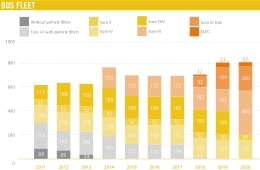
By providing increasingly efficient public transport, STIB is reducing car congestion and the pollution it causes. The shift in its fleet of buses towards innovative and more environmentally friendly technologies means that travelling by public transport is becoming even more ecological.
As a responsible business, STIB also wants to limit the impact of its activities on the environment. Its efforts were rewarded in 2020 with confirmation of its ISO 14001 certification and the awarding of BREEAM certification for its new Marconi depot.
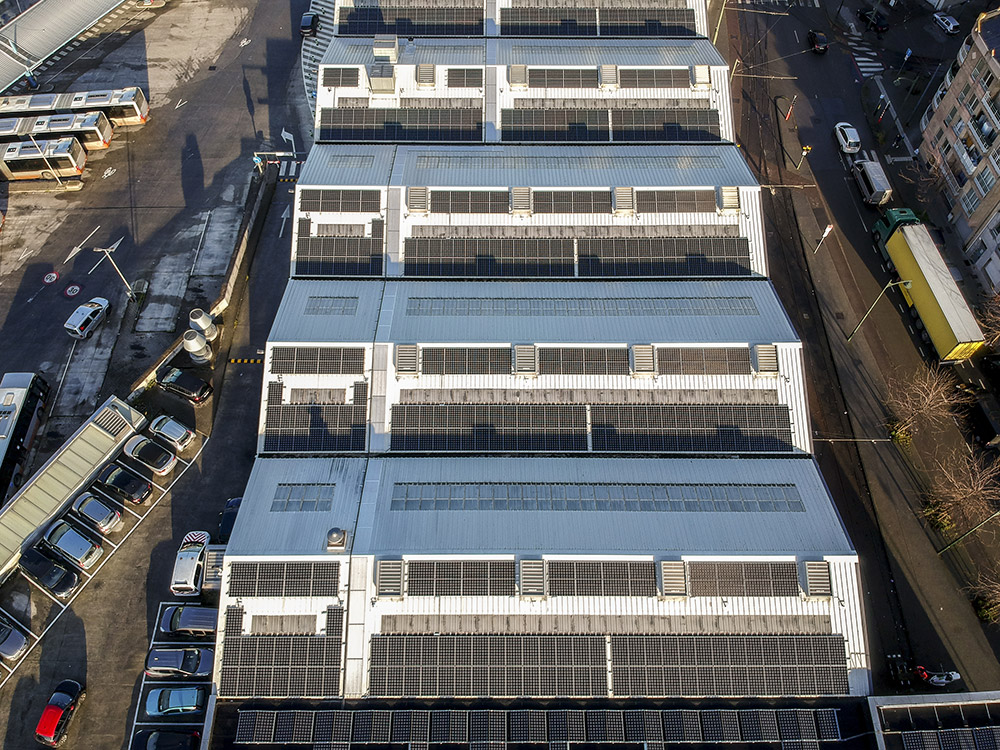
In 2020, STIB also continued the gradual installation of solar panels on the roofs of its buildings, in this case on the Jacques Brel and Schaerbeek sites. This contributes to its objectives of reducing its energy consumption.
The area around the Jacques Brel site is also getting a new look, with the creation of a new green space.
Increasingly clean vehicles
STIB is continuing to replace and expand its fleet.
Electric buses and hybrid buses are ever more numerous on the network. The shift towards innovative and more environmentally friendly technologies means that travelling by public transport is even more ecological. As such, STIB actively participates in the low emission zone set up by the Brussels Region.
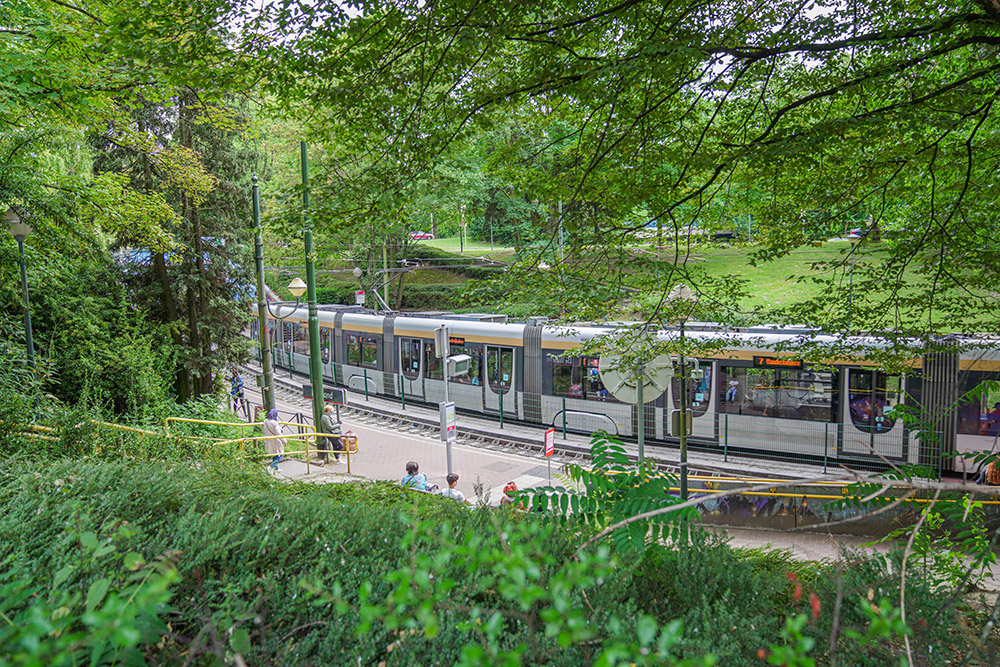
Trams and metros are powered by electricity and as a result do not directly produce any polluting emissions. Furthermore, STIB procures its energy from a supplier which is asked to prove - through Guarantee of Origin certificates - that it produces or purchases renewable electricity in quantities equivalent to its consumption.
ISO 14001 certification confirmed
In 2020, the STIB achieved the renewal of its ISO 14001 certification for 3 years for all its activities, by an independent certification body. This international certification aims to encourage companies to control the impact of their activities on the environment and demonstrate the effectiveness of both the management systems and the continuous improvement of their environmental procedures, in a way that respects legal provision and takes into account the context and stakeholders.
No non-conformities were detected during the auditors' visits and interviews. Among the many positive points were the environmental clauses included in the specifications for the purchase of hybrid and electric buses, the improvement of the health and safety record management system, the network of committed environmental correspondents and the deployment of a strong internal communication campaign, "Be STIB, Be Green", with a recognisable graphic identity, and the distribution of tools, such as eco-cards and "environmental toolboxes" for workshop and garage staff.
In addition, the Marconi depot, which opened in 2018, has officially received its final BREEAM (Building Research Establishment's Environmental Assessment Method) certification, with a "very good" rating. This is the most widely used environmental building assessment method in the world. The advantages of the Marconi site include energy management, rainwater recovery and biodiversity through the planting of native plants.

Installation of solar panels
At STIB, the energy transition does not just involve vehicles. In an effort to achieve increasingly sustainable consumption, the public transport company is gradually installing solar panels on the roofs of those sites whose configuration allows it, via the third-party investor mechanism, with the SolarClick programme as a priority. This Brussels-Capital Region programme envisages the installation of 85,000 m2 of solar panels on the roofs of public buildings in Brussels.
In 2020, after the Ixelles and Marconi sites (100% STIB project), it was the turn of the Jacques Brel site to become home to 1,959 panels, which cover around 14% of the buildings' electricity needs. And at the Schaerbeek site, the installation of 120 panels provides an average of 9% of the depot's electricity needs.
STIB has a total of 5,451 photovoltaic panels over all its sites, covering an area of 9,333 m2 and producing between 1,407 and 1,539 MWh annually. The electricity produced by STIB's panels represents the average annual electricity consumption of 402 to 440 Brussels households. This renewable energy production saves between 261 and 286 tons of CO2 per year. This contributes to STIB's carbon strategy and its objective of reducing greenhouse gases.
Energy performance
100% green energy
In its new public service contract, STIB is renewing its objective of reducing its energy consumption by 8.5% over the period 2019-2023, at constant activity. STIB's energy consumption includes all the energy vectors (gas, electricity, diesel) used for all its activities (rolling stock and infrastructure).
Between 2018 and 2020, STIB's energy performance increased by 7.4%
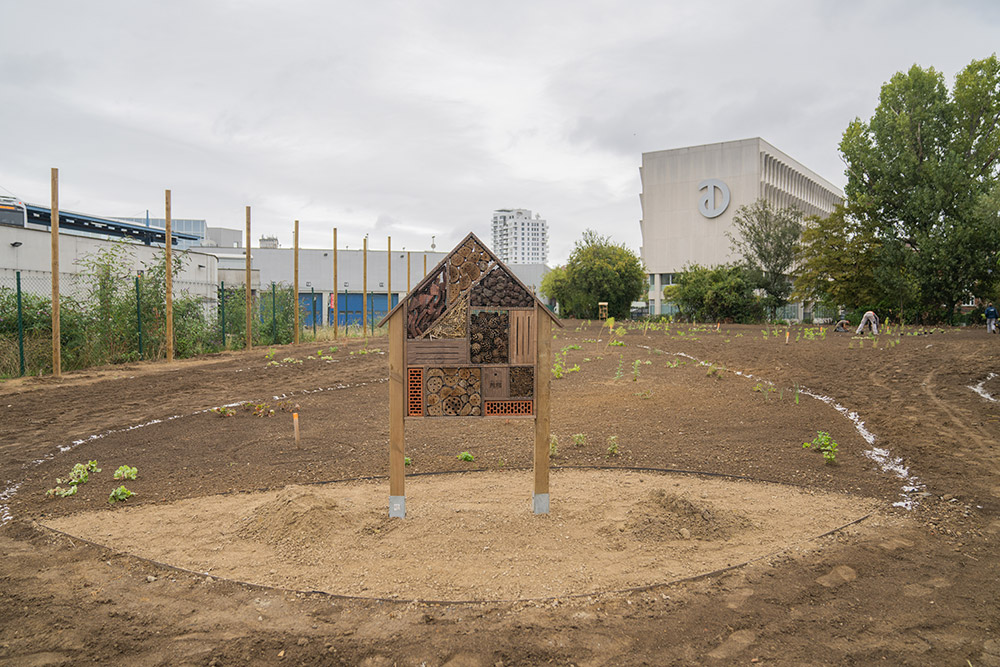
A new green space between Demets and Brel
In collaboration with the "Nos Pilifs" farm, STIB has created a new green space, nestled in a previously underused area between the Demets and Jacques Brel sites in Anderlecht. To optimise the space in terms of biodiversity, consultations were held prior to the project, particularly with Natagora.
This area is destined to become a real paradise for wild bees, thanks in particular to the planting of melliferous plants. It will also be a refuge for other insects thanks to the presence of insect hotels.
This area will soon be home to a flower meadow, perennials, trees and shrubs.
The creation of this green space in the vicinity of the Demets and Jacques Brel sites illustrates STIB's desire to integrate its infrastructures into the urban landscape.
Social commitment
Safety at the heart of STIB’s concerns
Safety, in all its forms, is at the heart of STIB's concerns.
The public transport company is responsible for not exposing its customers, employees, infrastructures or information systems to any accidents or incidents whatsoever (road safety, injuries, attacks, spam, data protection, etc.), both within the company and on the network.
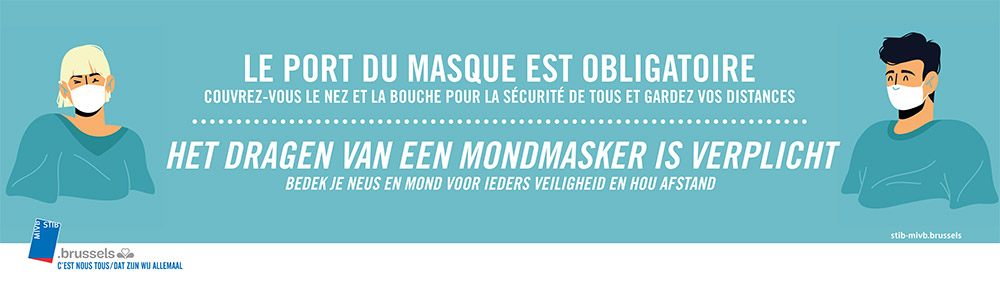
In 2020, as a result of the pandemic, the tasks of STIB's security staff were temporarily redirected towards monitoring customers' compliance with health measures.
Overall risk management has also taken a particular turn, with increased attention paid to strict compliance with hygiene standards, including stepping up the cleaning of vehicles and infrastructures.
Network safety also involved raising awareness among public transport and road users. STIB reminded people of this through several humorous campaigns.
The health crisis has had repercussions on the actions that STIB has been carrying out for several years, with specialised partners, to respond to the social problems it is facing as part of its role as a public transport company. These actions targeting different sections of the public (people living rough or in precarious situations, young people of school age and people with reduced mobility) have had to be adapted or rethought.
STIB is also reaffirming its support for Plan International, with which it works to raise awareness of gender-based harassment, by selling masks on its online sales site, stibstore.

Securing the network
STIB has its own security service with more than 300 security agents to ensure the safety of customers, staff and public transport facilities in Brussels. These agents carry out intervention and inspection tasks on the network. More than 250 multimodal agents also perform passenger information, infrastructure verification and prevention tasks. The objective is to provide an enhanced human presence on the network and make customers' journeys more pleasant. Network security also involves a major surveillance camera system, with 6,000 cameras on board vehicles and 3,450 in stations.
In total, 25,374 missions (surveillance, security, ticket control, etc.) were carried out by the STIB security service in 2020, i.e. an average of about 70 missions per day.
As a result of the COVID-19 pandemic, the tasks of STIB's security staff were temporarily redirected towards monitoring customers' compliance with health measures (social distancing, mask-wearing, etc.), in collaboration with the police services.

Global risk management
STIB has a global risk management system for all the company's departments. In this context, it pays particular attention to the risks involved in operating its (metro, tram and bus) network, so it can limit the risks as much as possible and guarantee the continuity and availability of its transport solutions.
In 2020, in the face of the pandemic, risk management also meant strict compliance with hygiene standards, in particular by improving the cleaning of vehicles and infrastructures.
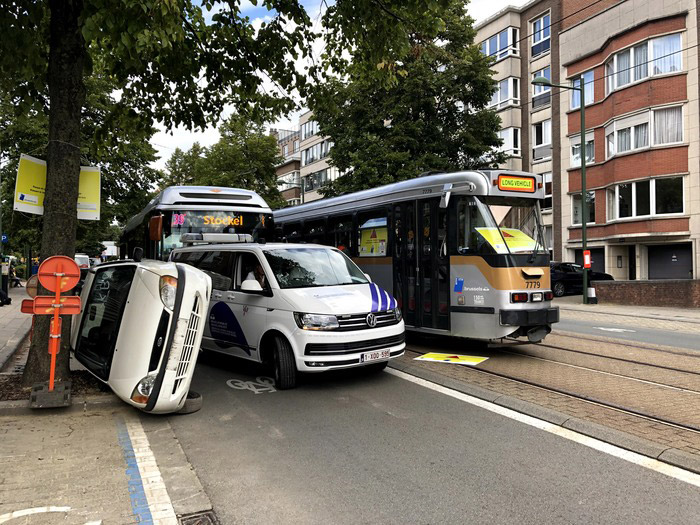
But the health crisis did not prevent STIB from pursuing other risk management actions. In August it organised a disaster exercise near Stockel station, in collaboration with Brussels Mobility, the municipality of Woluwe-Saint-Pierre and the Montgomery police zone. The simulation of an accident between a bus, a tram and other vehicles allowed the procedures and coordination between the various parties involved to be tested and thus further improved.
In September, STIB also equipped two of these buses with anti-collision systems. This test was carried out in collaboration with VIAS, the Institute for Road Safety. It was intended to evaluate the solutions proposed by the two systems, via feedback from driver-testers.
Safety is everyone's business
Network safety also involved raising awareness among public transport and road users. STIB is therefore continuing its safety campaigns to emphasise good behaviour on public transport and in the vicinity of the network. These campaigns take the form of posters, radio advertisements and videos and are distributed through traditional channels and on social media.
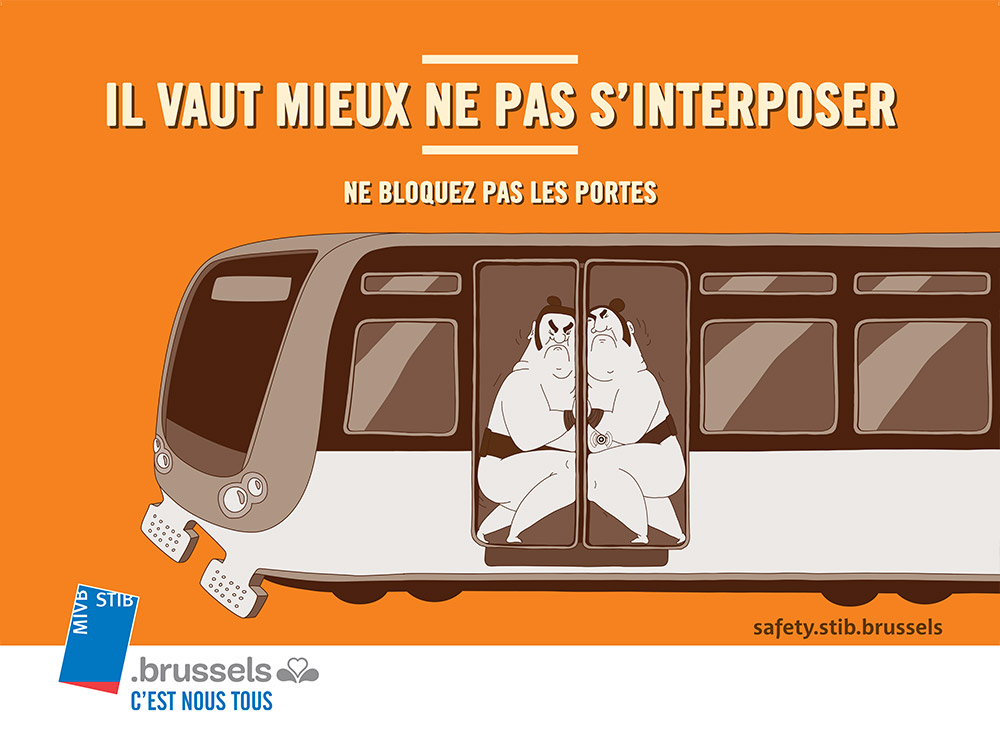
In 2020, STIB adopted a humorous tone to remind passengers of the importance of respecting the door closing signal. The campaign featured two sumo wrestlers or two rugby players, who are shown on the doors of vehicles, accompanied by the slogan "Don't get caught between them!" It also continued its campaigns to make drivers, passengers and other road users aware, so that they become more careful and attentive when a tram is approaching. The 2020 campaign emphasised the braking distance of trams, illustrated by a herd of elephants.

Awareness in schools
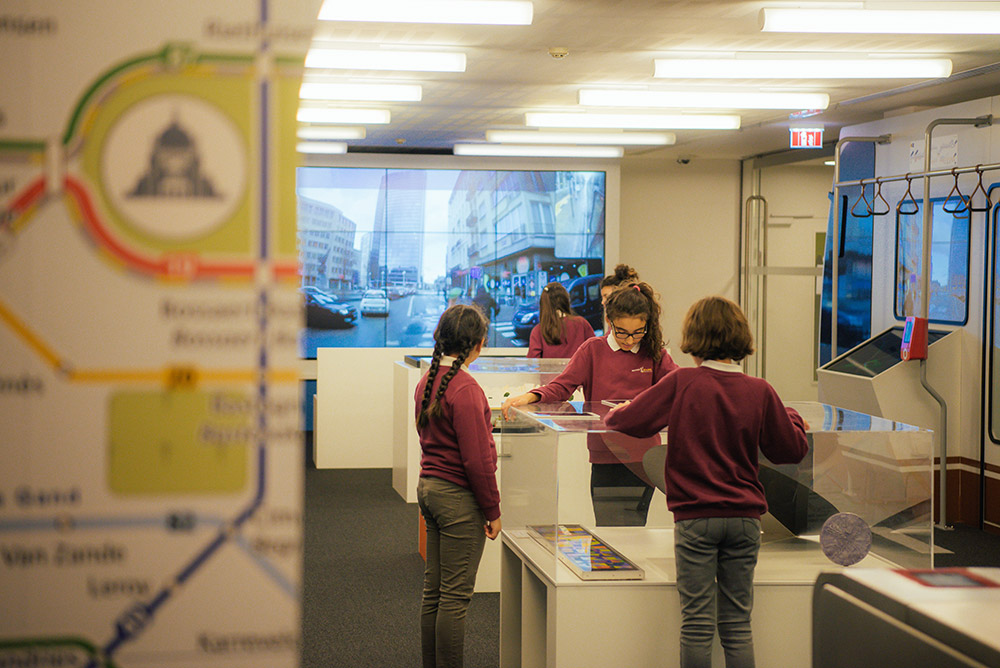
In collaboration with the non-profit organisation GoodPlanet, STIB has been running a fun, educational campaign since 2018, called "MobXadventure", aimed at 5th and 6th grade primary school students in the Brussels Region, all networks combined. For the 2019-2020 campaign, 70 classes - or around 1,750 students - signed up for the adventure. Unfortunately, the campaign had to be cut short in March due to the pandemic and several classes were not able to complete their journey. However, 129 of the initially planned 210 activities took place.
The Tram Safety events, designed to raise awareness among primary and secondary school pupils, were offered to 14 classes - some 350 pupils - in January and September 2020. These events aimed to draw pupils' attention to the priority of trams and the careful behaviour to adopt when one approaches.
The "Magic School Bus" arrives
In 2020, STIB continued to support the various partners with which it works to carry out social cohesion initiatives with young people. This was the case in Aumale with the Safa non-profit organisation and in Etangs Noirs and Osseghem with the Centrum West non-profit. This allowed them to maintain contact with the young people during lockdown periods, support them with their academic problems and create new, remote social links.
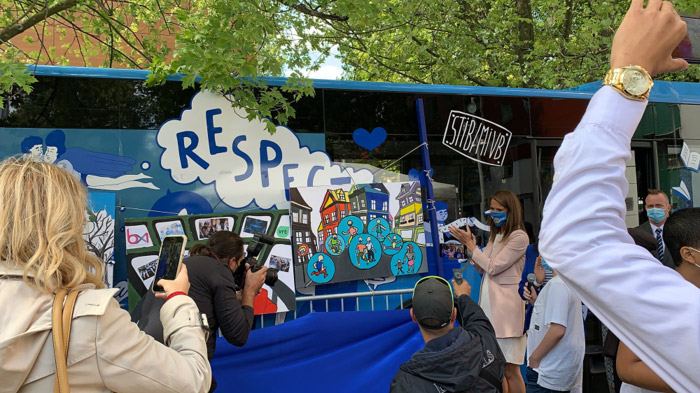
But this difficult period also resulted in new social inclusion initiatives. During the summer, the STIB "Living Together" bus was transformed into a "Magic School Bus" at the instigation of the La J non-profit organisation, in partnership with the Geomoun non-profit. Over the course of six weeks, it set up in different municipalities of the Brussels Region to help young people experiencing educational problems as a result of lockdown. The project ended with a public celebration, in compliance with health regulations, during which the young people were able to present their work to Prime Minister Sophie Wilmès. A total of 60 children between the ages of 10 and 14 were able to participate in this remedial project.
Positive reappropriation of spaces
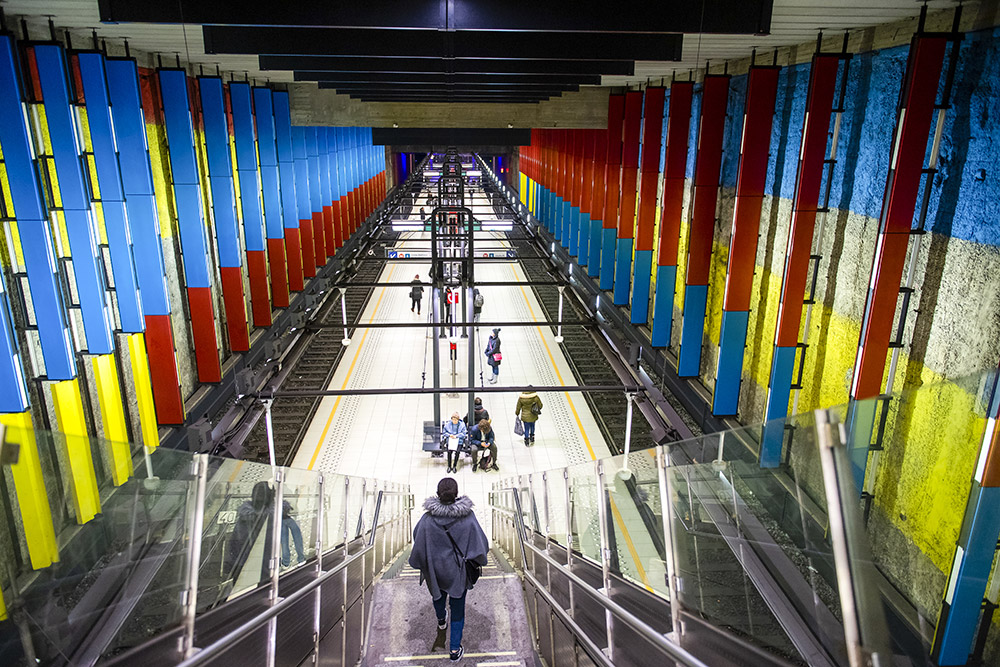
For many years now, in collaboration with local partners, STIB has been setting up projects for the positive reappropriation of spaces, in particular to combat uncivil behaviours and vandalism in and around stations. In addition to the non-profit organisations Safa and Centrum West, it partners with the non-profit organisation Objectif, which occupies the "Bockael" in Bockstael station. In this space made available by STIB, the organisation coordinates various activities organised by a series of local actors (help in finding a job, laughter and self-defence workshops, creative workshops for children, help in obtaining Belgian nationality, etc.). After being shut down for many months following the health crisis, activities were gradually resumed in November 2020, in compliance with the health standards in force.
In September, a new exhibition by the KANAL-Pompidou Centre took place in Yser station. It highlighted the creative thinking of Swiss artist John M. Armleder, in connection with the launch of the work to transform the Citroën garage into a Brussels museum dedicated to modern and contemporary art and architecture.
Alongside the most vulnerable
Thermos 2020 =
- 258 STIB volunteers
- 21 evenings
- 13,064 meals served to the homeless (2,324 of which were served by STIB volunteers)
To deal with the impact of the health measures imposed by the Government on people living on the streets and in vulnerable situations, STIB strengthened its long-standing collaboration with actors from the social sector (Dune, Transit, Infirmiers de rue, New Samusocial, the Red Cross, Diogènes, Retour volontaire et vie précaire commune Anderlecht, Médecins du Monde), so that they could go out and meet these people in the network and direct them to suitable reception and care facilities.
STIB also confirmed its support for the Médibus project, which is run by the non-profit organisations Médecins du Monde and Dune. This mobile front-line approach made it possible to reach the most disadvantaged people and offer them medical care and psycho-social follow-up. Médibus also provides services for drug users, with the aim of reducing the risks associated with drug use (exchange counter).
The distribution of meals at Botanique station by the non-profit Opération Thermos came to an abrupt halt on 13 March 2020 with the announcement of the first lockdown. Ten of the 31 evenings scheduled for STIB volunteers could not take place. A new Takeaway scenario was created for the new season, which guaranteed a hot meal every evening between 1 November and 30 April for the most deprived people.
Masks for Plan International
STIB and Plan International Belgium decided to join forces to combat gender-based harassment on Brussels public transport. One of the results of this collaboration was the launch of a campaign, carried out in collaboration with young activists from the NGO.
In 2020, Plan International asked two Belgian cartoonists - Philip Geluck and Eva Mouton - to create a range of exclusive masks to benefit its projects to combat the spread of COVID-19 in Africa, Asia and Latin America. STIB decided to support its partner by selling these masks on stibstore, its online sales site.
The collaboration between STIB and the NGO Plan International Belgium will continue in 2021 and lead to new initiatives to combat gender-based harassment on public transport.

Transparency and data protection
STIB ensures the protection of personal data within its various departments, in compliance with the General Data Protection Regulation (GDPR). Privacy governance principles have been defined to ensure consistency across the company. All projects with a significant impact on personal data, such as the mobile application, are subject to an impact analysis to identify the appropriate protection measures.
The data protection team was strengthened in 2020, particularly to better support employees, who were invited to take an e-learning course on data protection.
STIB has also published a Privacy Statement on its website containing a detailed and transparent description of the various data processing operations it carries out. The purpose of this statement is to inform clients, candidates for recruitment and everyone else how their data is used, so that they can exercise their rights.
With regard to the rights of data subjects, in 2020 STIB received 164 requests (exercising of rights, complaints, questions from third parties), 78.90% of them concerning the right of access to data. This is an increase of 50.4% compared to 2019. 96.75% of the requests to exercise a right were processed within the legal deadlines.

Accessibility
Network accessibility
39 AccessiBus lines
Making the network accessible to all citizens is one of the objectives of the Brussels public transport company. STIB is working closely with the Brussels-Capital Region and with the community sector to achieve this.
The STIB website contains specific pages that provide a lot of useful information for people with reduced mobility: station accessibility, the most accessible bus and tram lines (AccessiBus and AccessiTram principle), station assistance, TaxiBus service, specific transport tickets and the availability of lifts in (pre)metro stations. The availability of lifts is presented dynamically, in real time, on STIB's website and mobile app.
In 2020, a new document was added to the "Accessibility" section of the website. STIB published the "Guide for travellers with disabilities" online. This guide, in three languages, is also available in printed form in KIOSKs and BOOTIKs.

AccessiBus and AccessiTram
Eleven additional bus lines were added to the existing AccessiBus lines in 2020. This takes to 39 the number of lines displaying information regarding the level of accessibility of each stop: the drivers have been trained in welcoming people in wheelchairs, the infrastructure has been checked throughout the route, the signage at all stops has been adapted and particular attention has been paid to the vehicles' access ramps.
On 3 December, International Day of Persons with Disabilities, STIB launched a pilot project on tram line 7, installing portable ramps in T4000 trams. The aim was to use an AccessiTram approach by concretely and significantly improving the line's accessibility. A trial period is planned to evaluate the use of these portable, light and easy-to-handle ramps in real-life situations. If the test is successful, all T3000 and T4000 trams will also be equipped.

Next chapter
-
Briefly
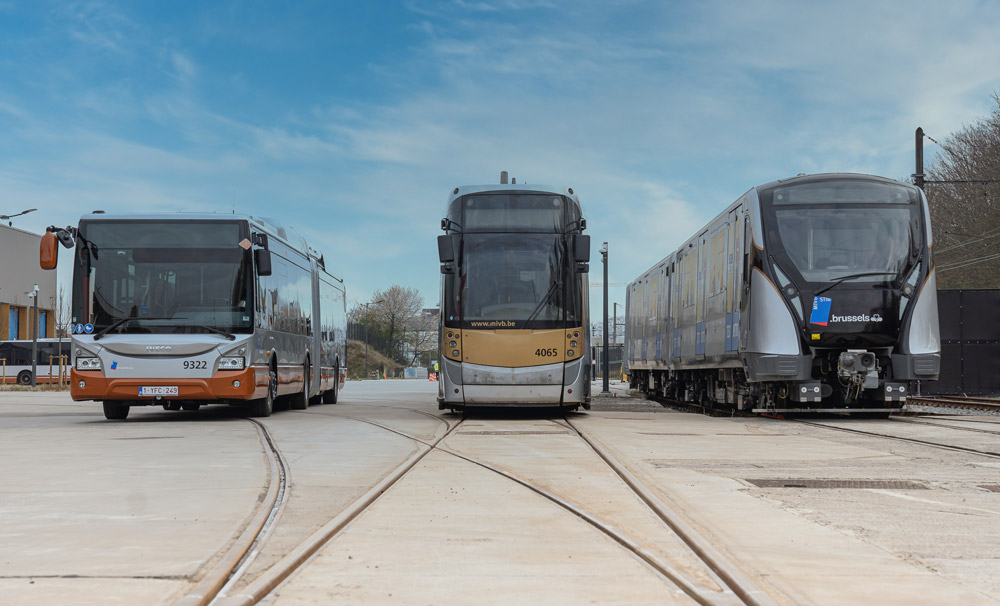
A company governed by public law and linked to the Brussels-Capital Region by a public service contract.