Responsibility
Corporate social responsibility
Published on
STIB is a responsible urban stakeholder. The company is continually improving its environmental performance and proactively contributes to Brussels' sustainability ambitions and challenges.
It is developing the accessibility of its services, promoting diversity and fostering inclusion and social cohesion, both within its organisation and with its customers.
It constantly monitors the safety of its passengers, staff, third parties and infrastructure.
Economic commitment
Participating in investments
€ 6.2 billion in investments
Over the 2019-2028 period, € 6.2 billion in investments will be dedicated to improving mobility in Brussels. For the most part, these large-scale investments are financed by the annual allocations of investments awarded to STIB by the Brussels-Capital Region and the amounts allocated by the Federal government under the cooperation agreement with Beliris. As a responsible public company, STIB is also expected to help fund these investments, insofar as its resources allow, through the implementation of a savings programme (called DRIVE), based on a principle of good governance and optimising its processes.
Environmental commitment
Commitment to the planet
STIB provides a means of sustainable mobility, but as a responsible company, it also takes tangible measures to protect the environment in the context of its operations. STIB is therefore acting on both these fronts, for a greener future.
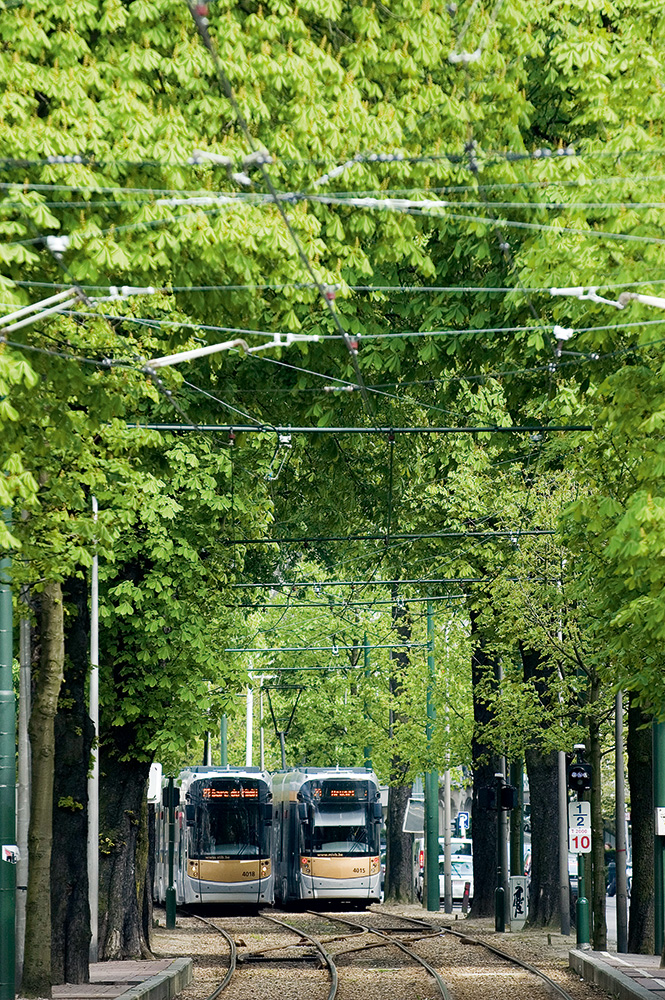
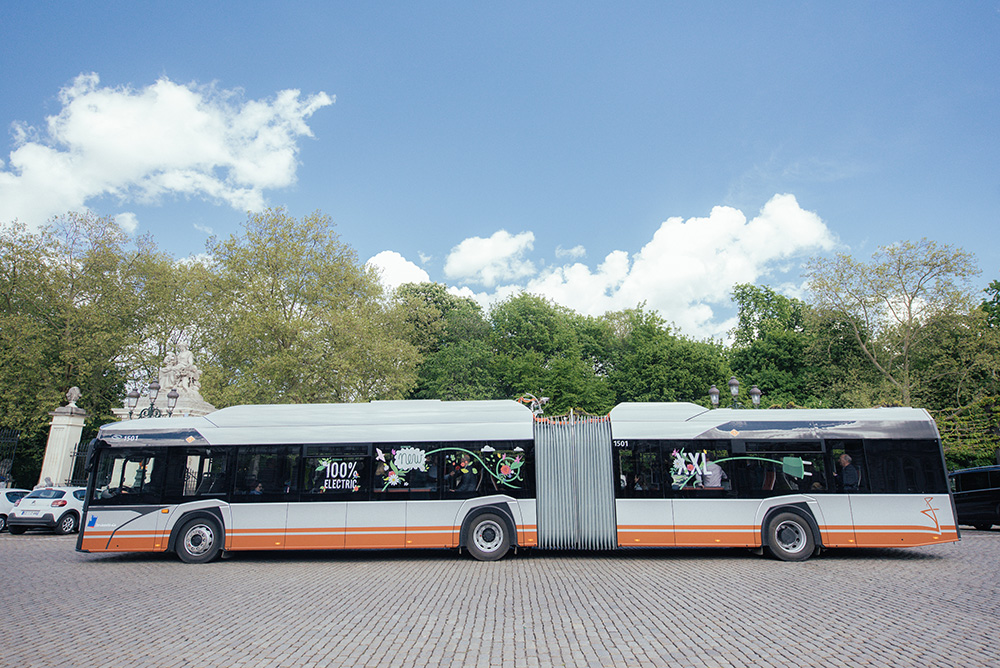
The environmental dimension is at the forefront of all STIB projects. Whether in terms of the propulsion method for its vehicles: hybrid, electric or hydrogen buses, or in the design of its infrastructures. The new depot at Erasme is committed to a BREEAM certification process, as was the case with the Marconi site, the De Brouckère station and the new Maintenance Centre at Haren.
STIB runs for climate
A new climate march was organised in Brussels on 10 October 2021. On this occasion, the STIB network was accessible free of charge. This is one way in which STIB reminds us of its daily commitment to the climate throughout the year.
ISO 14001 certification for STIB
STIB has been audited under the ISO 14001 certification again this year. This standard focuses on the continuous improvement of environmental performance. STIB was able to demonstrate improvements in various areas, not only in the workshops, garages and at different company sites, but also in its internal processes.
Energy performance
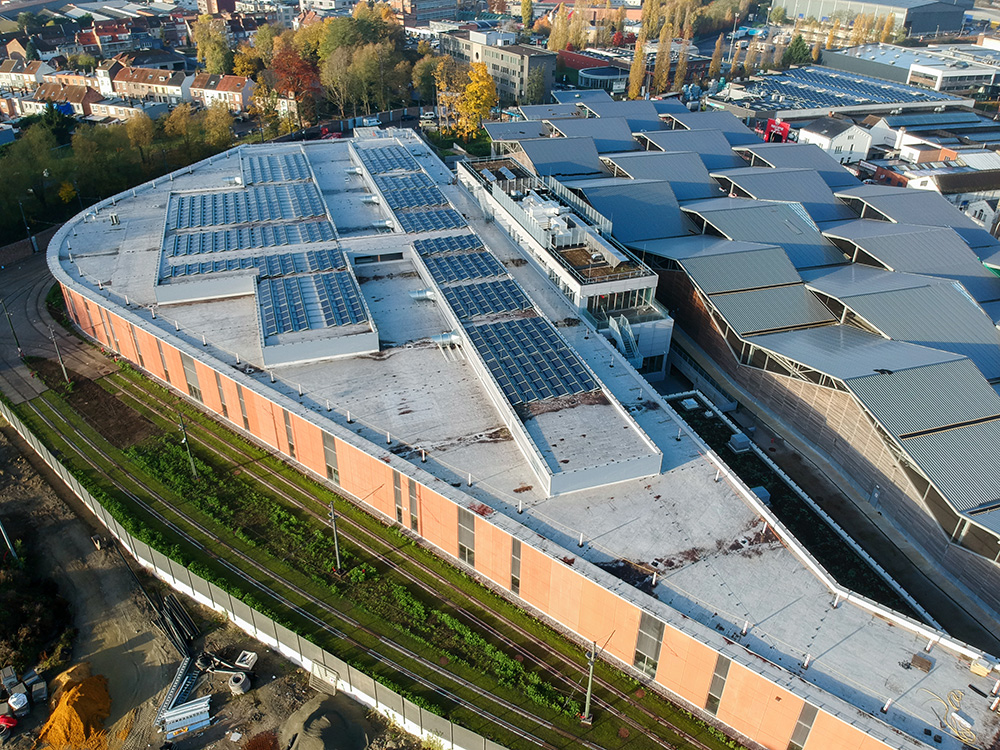
Energy consumption in the buildings remained well under control despite stricter ventilation requirements. Between 2018 and 2021, STIB's energy performance improved by 6.2%, due in particular to the acquisition of hybrid and electric vehicles.
Repair Café, upcycling... STIB focuses on recycling
Always with an environmental approach, STIB is focusing on the circular economy. So, it repairs what can be repaired, reuses it for other purposes or resells it so that others can benefit from it. Not just vehicles and spare parts, but also furniture such as lockers: STIB shows originality when it comes to recycling.
A Repair Café was launched on the initiative of the company's employees, with the aim of putting employees' talents to good use in repairing everyday objects and small appliances. Organised every last Friday of the month, it is held at Molenwest, an area next to the Gare de l'Ouest station and made available to associations as part of urban development programmes.
In terms of upcycling, various collectibles, including unique pieces, are created from old ticket validators, leather from vehicle seats and even construction site tarpaulins. They are then sold on the STIB web store, www.stibstore.be.

Societal commitment
Contributing to city life
STIB is an integral part of Brussels, of life in the city, and intends to make a positive contribution to it. Beyond its mission as a transport provider, it promotes diversity in all its forms and acts as a responsible and committed stakeholder for a fairer society in which everyone feels safe.

Feminisation of stations for Women's Rights Day
On International Women's Rights Day, STIB temporarily renamed 10 metro stations in honour of 10 remarkable women. STIB wanted to highlight the importance it attaches to women's place in the public space.
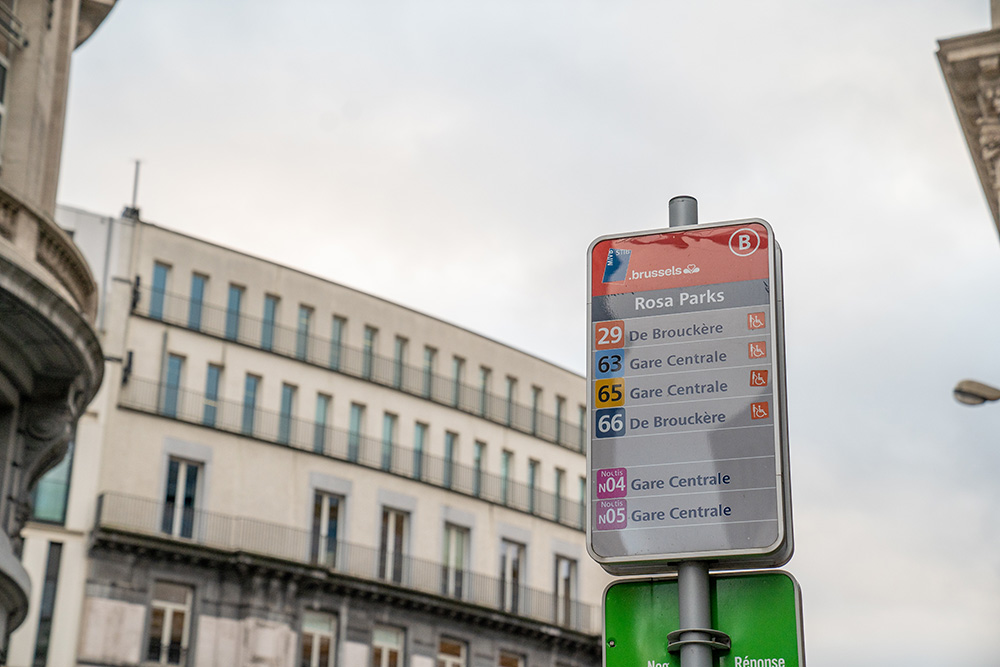
In order to contribute to the feminisation of the public space, STIB has committed to feminising the names of its surface stops whenever an opportunity arises. The names of stops very often refer to the surrounding streets, which is why they are often male. Since 2021, STIB has planned to name at least 4 stops after a female personality every year. In 2021, STIB introduced 7 new women's names on its network and will continue this initiative in the years to come.
Safer buses with camera mirrors
Safety is a central concern for STIB, which is why it remains attentive to technologies that could provide added value in this area. Camera mirrors are a new technology that is growing rapidly on trucks, but still rare on buses. However, they have many benefits: easier manoeuvring due to being much smaller in size than traditional mirrors, drastic reduction of blind spots, better visibility whatever the time or the weather...
In 2021, STIB tested a bus fitted with this technology on its network in partnership with the Vias Institute for Road Safety. The tests will continue in 2022 and, if the results are conclusive, this technology will be included in the specifications of future bus orders.
STIB supports flood victims
Summer 2021 was sadly marked by the floods that hit Belgium along with other countries. The outpouring of solidarity that followed was also remarkable. STIB also made a contribution.
At first, it was especially important to clear and clean. In addition, the Transport & Intervention department, which usually provides assistance when there are incidents on the network, travelled to a disaster area with a team and heavy equipment to help with the cleaning and transport bulky items to landfill areas.
Many people lost their means of transportation, or faced financial difficulties because of this tragedy. STIB therefore teamed up with the three other public transport operators in Belgium - De Lijn, TEC and SNCB - to offer free "solidarity" travel to flood victims.

Campaigns to raise passenger awareness
Every year, STIB launches new campaigns to make its passengers aware of the rules for using Brussels' public transport, in order to make it a pleasant and safe space for everyone. 2021 was no exception. Passengers were asked, with a touch of humour, not to block the doors, to give priority to the tram or to signal the driver to stop.
STIB considerate to the well-being of young people
More than ever during the pandemic, it was important for STIB to continue to support the various partners with which it works to implement social cohesion initiatives among young people. The objective was to maintain contact and help and support them in their academic and/or personal difficulties.
In 2021, meetings between young people from the non-profit organisation Centrum West and STIB employees with inspiring profiles were organised. In July 2021, a mural was unveiled at the Aumale metro station. It was the result of the creativity of the young people of the non-profit organisation SAFA and thanks STIB employees for their efforts during the pandemic.
The "Living Together" bus, specially equipped to organise activities, was made available to various partners to enable them to meet young people on the ground.

Help for the most disadvantaged more necessary than ever
The pandemic has certainly impacted vulnerable people. STIB has strengthened its collaboration with those involved in helping homeless people and combating drug addiction (the non-profit organisations Dune, Transit, Street Nurses, the New Samusocial, the Red Cross, Diogenes, Médecins du Monde, Modus Vivendi, etc.) and the street educators of the municipalities to help care for vulnerable people and so that they can be referred to appropriate reception and care structures.
STIB has also reiterated its support for the Médibus project, which is run by the non-profit organisations Médecins du Monde and Dune. This mobile frontline approach has made it possible to reach the most disadvantaged people and offer them medical care and psychosocial monitoring. There are also helplines for drug addicts.
At the end of 2021, recurring cleaning actions were organised on rue Couverte next to the Gare du Midi and continued into 2022. These actions aim to minimise the negative impacts of the presence of homeless people on the STIB network for passengers and raise awareness of the need to respect the premises.
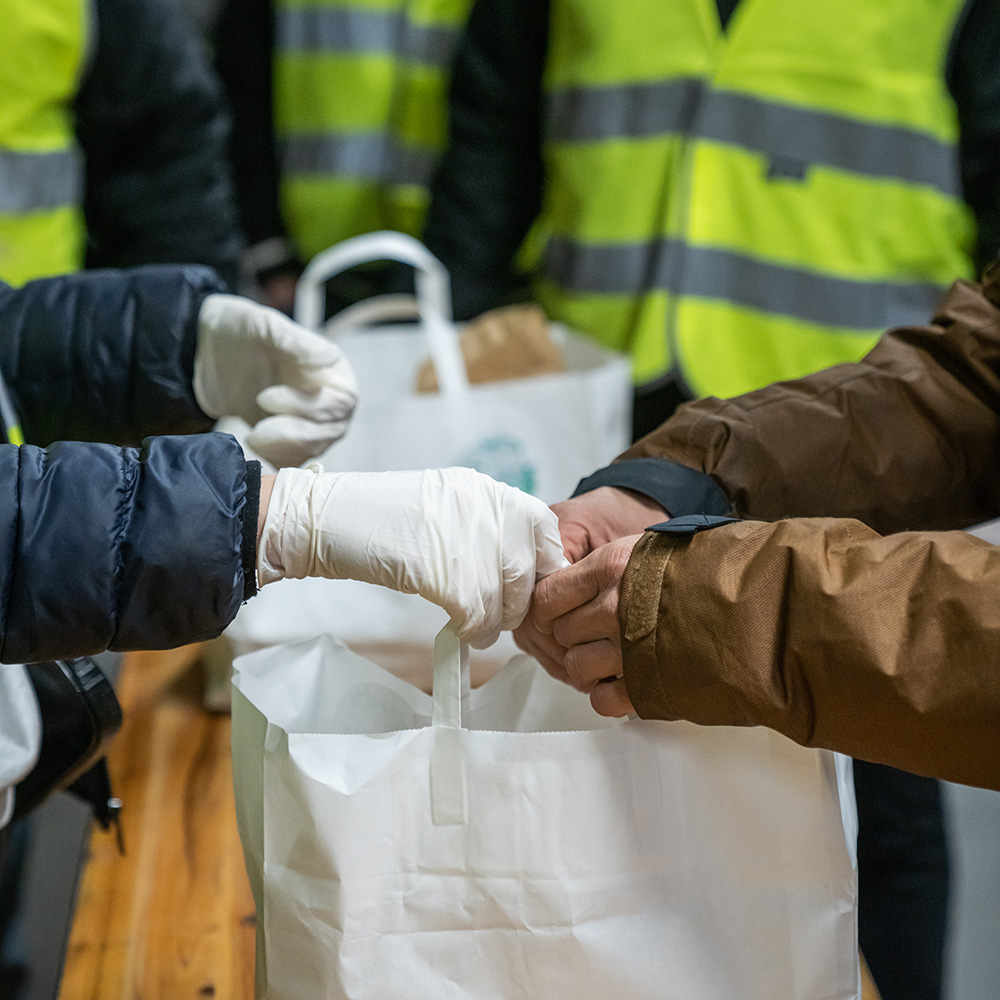
Supported by STIB, the non-profit organisation Opération Thermos continued to distribute meals to the homeless every evening between November and April in the Botanique metro station. The "Take Away" formula allowed volunteers to adapt to health constraints. During the 2021-2022 season, STIB employees took on 41 evenings of meal preparation and distribution.
Accessibility
On the way to a more accessible network
100% of daytime bus routes AccessiBus
STIB is constantly working to make its network more accessible to people with reduced mobility. To this end, it is working in partnership with Brussels Mobility on installing and renovating the lifts in its stations as well as redeveloping its surface stops. This process is being carried out in partnership with the voluntary sector, in order to use its expertise to offer ingenious, customised and efficient solutions, as was the case with the platform edges for example.
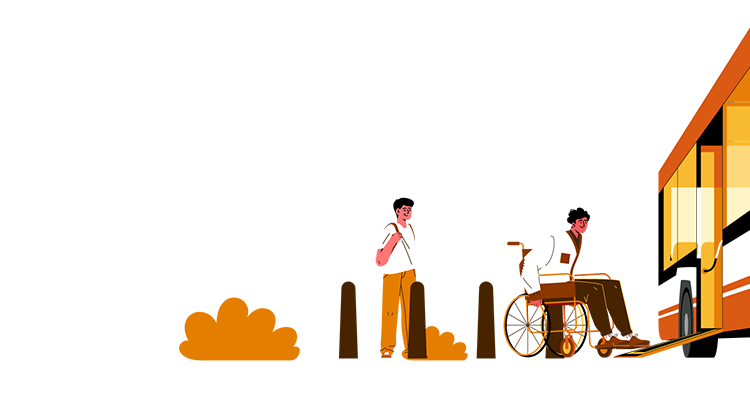
In 2021, two additional stations were fitted with lifts: Clemenceau and Roodebeek. Fifty of the 69 metro stations now have wheelchair accessible platforms. Another major achievement from 2021 is that all STIB daytime bus lines are now AccessiBus. This means that people with reduced mobility have relevant information on the level of accessibility of all bus stops, that the operation of access ramps is checked regularly and that drivers are trained and made aware of how to use them properly.
All daytime bus routes now "AccessiBus"
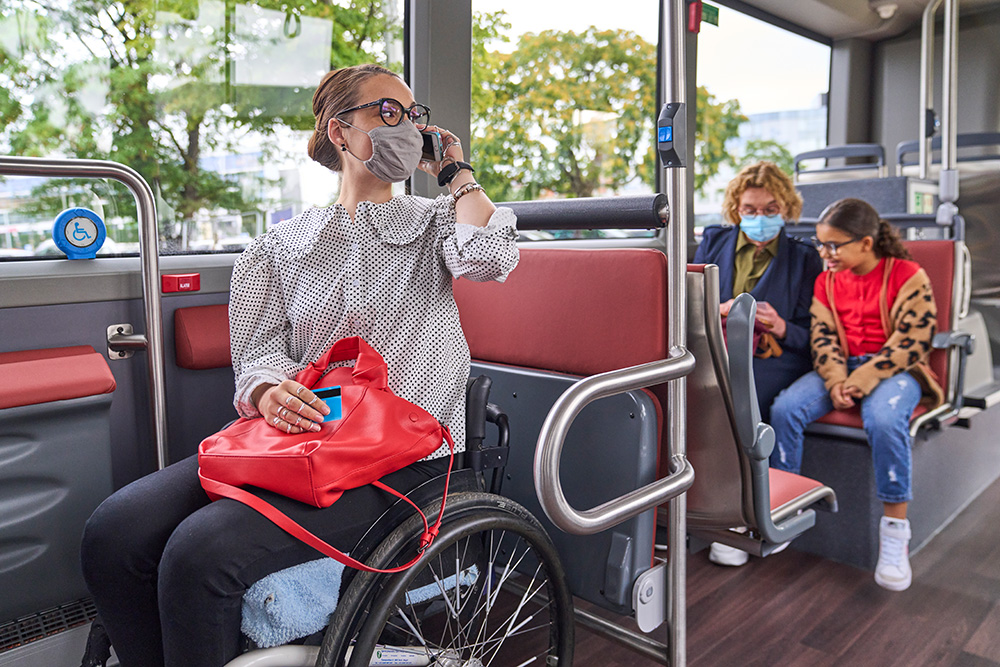
Since late 2021, all STIB's daytime bus routes have been "AccessiBus". In practical terms, for each route, there is a form on the STIB website listing the level of accessibility of each of its stops, information that is also included at the stops themselves and on the screens inside the vehicles.
Nearly 1,400 bus stops have been audited and categorised as "accessible", "accessible with assistance" or "not accessible". In addition to the signage for passengers, information has also been provided at the stops for the drivers, at the level of the bus stop line. Depending on the colour of the pictogram next to the blue line, the driver knows whether they can kneel the bus to deploy the ramp - the green pictogram - or have to keep the bus in normal position - the red pictogram.
Complete and up-to-date information is essential so that people with reduced mobility can organise their trip. This is therefore one more step towards a more accessible network.
Trams are also more accessible
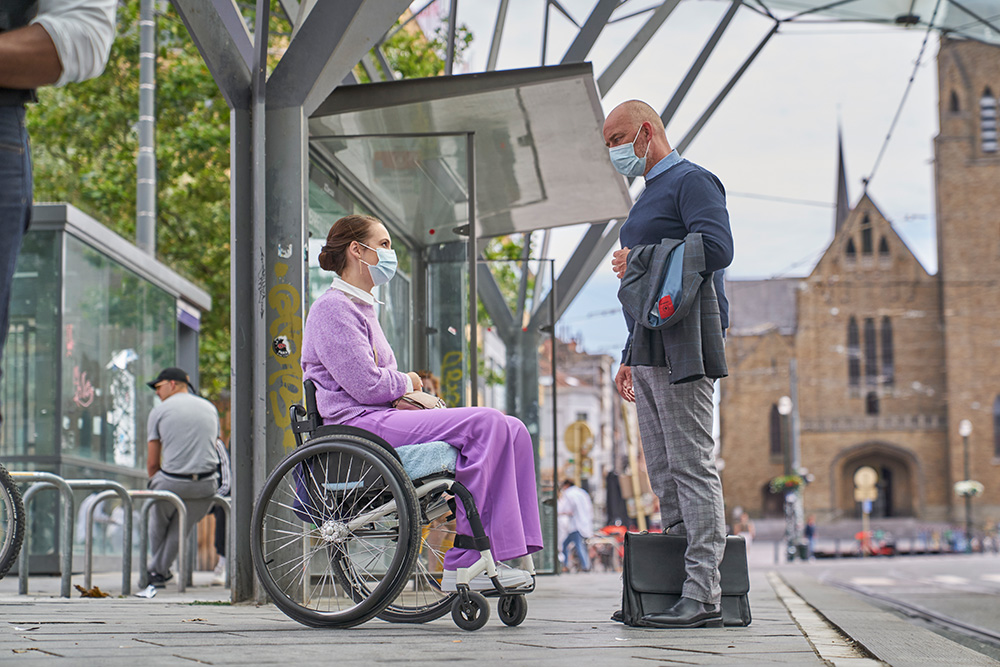
In collaboration with the CAWaB, the Collectif Accessibilité Wallonie-Bruxelles, STIB has developed a new device to bridge the gap between the tram and the platform. At stops which have been raised, this flexible rubber edge makes it easier for people in wheelchairs, parents with prams, the elderly or passengers with shopping carts, for example, to access the vehicles.
In late 2021, the extended line 9 was the first to be fully equipped with this device. Twenty-two further stops also benefited from this innovation when they were renovated. The plan is to continue to deploy this system throughout the tram network, during the redevelopment of surface stops.

Next chapter
-

Briefly
The STIB is a company linked to the Brussels-Capital Region by a public service contract.