Customers
Published on
Passenger satisfaction is a major commitment for the STIB and its employees. Understanding priorities, anticipating needs and meeting expectations are daily challenges that enable us to offer an efficient, high-quality service to our customers, build their loyalty and turn them into our best ambassadors.
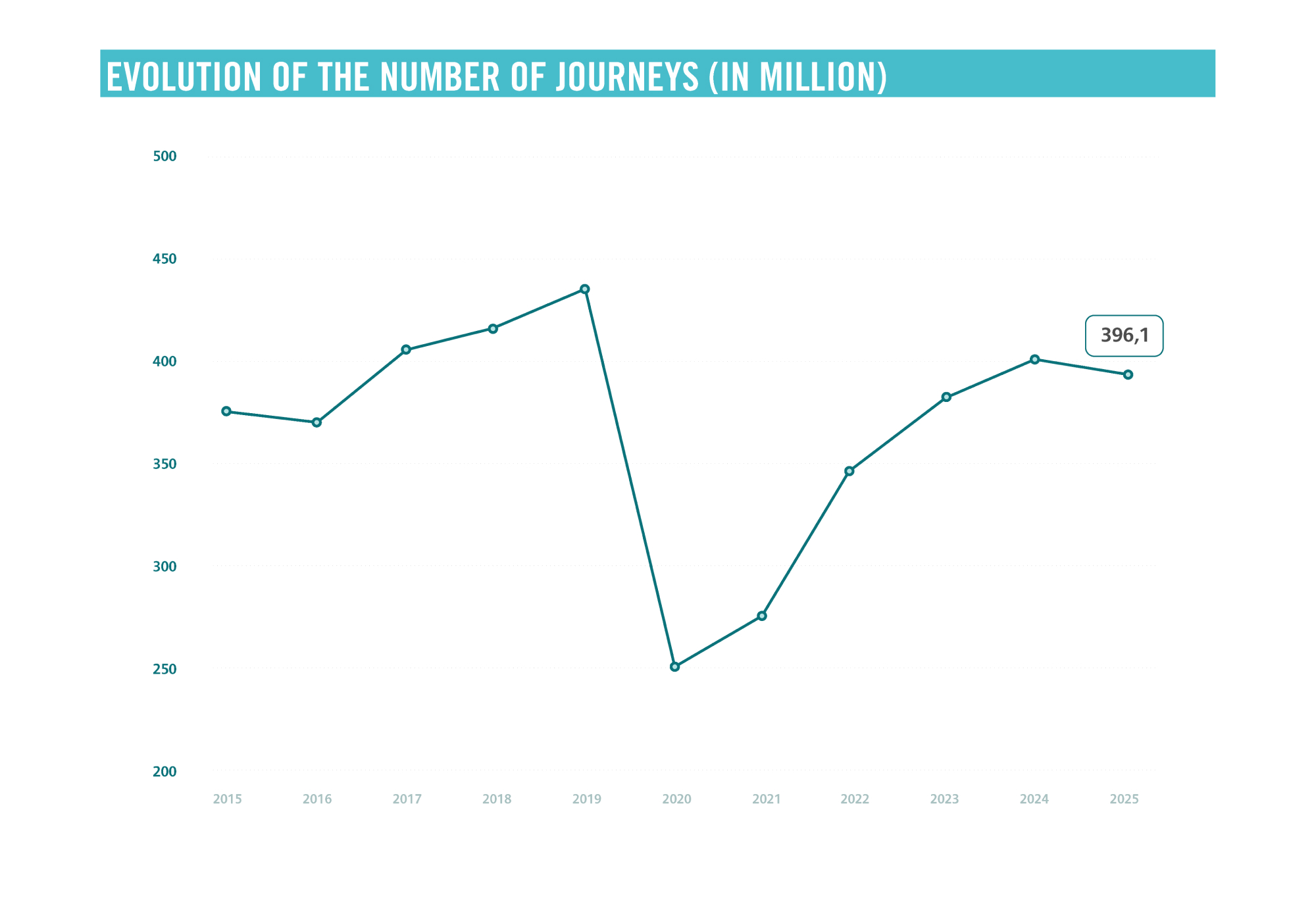
396.1 million journeys
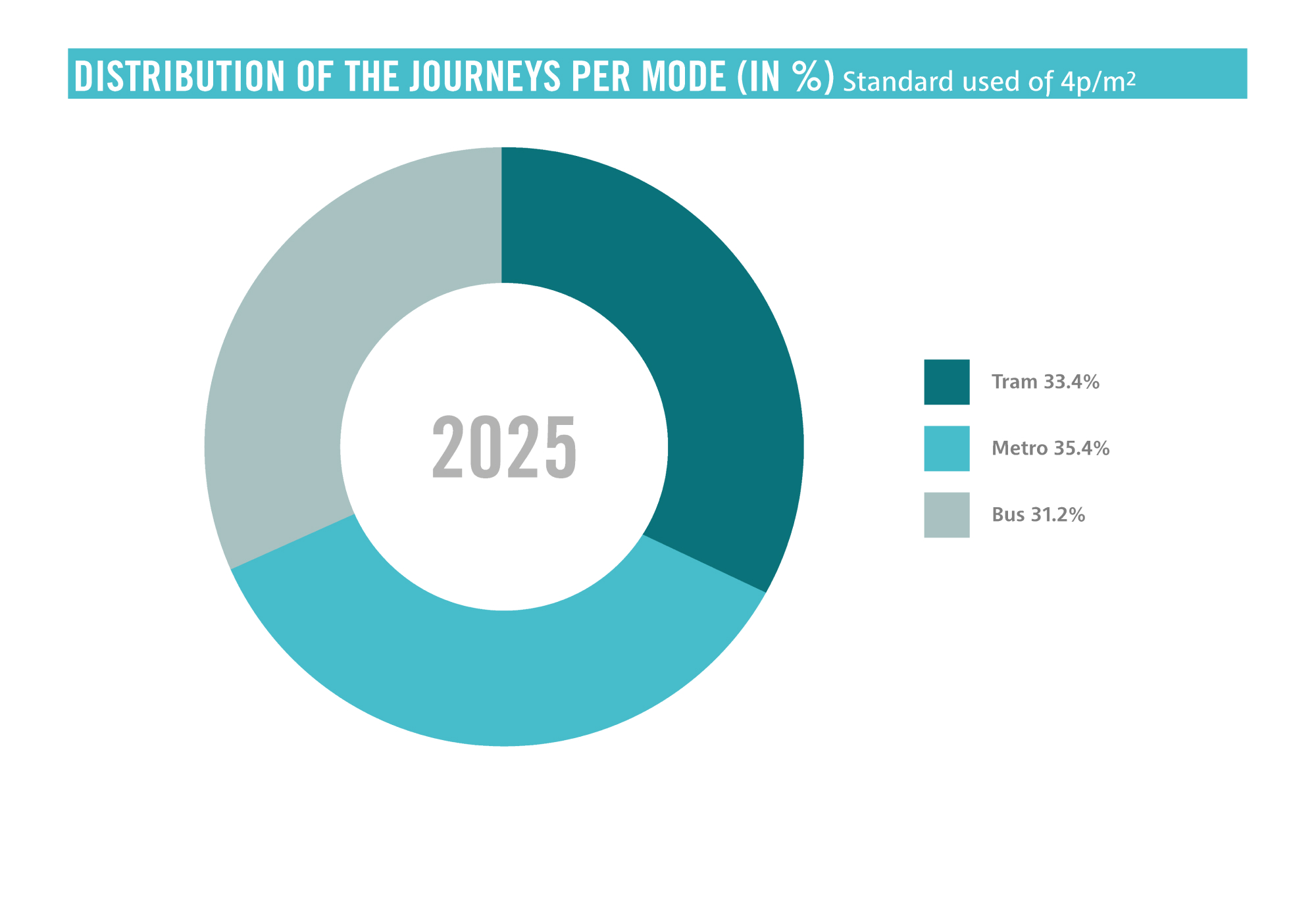
With 396.1 million journeys made by bus, tram and metro, ridership on the network remains at a very high level, close to that of 2024. Brussels residents still overwhelmingly choose public transport for their daily journeys, as shown by a recent study by Brussels Mobility.
Despite occasional disruptions due to strikes, maintenance and infrastructure modernisation works, ridership remains strong. These works, particularly on several major tram lines, aim to improve reliability and comfort for passengers in the long term.
Outside of periods of disruption, the trend is clearly positive. On an average weekday without incident, ridership is up 1.5% to nearly 1.4 million trips per day. On weekends, ridership exceeds pre-pandemic levels, while off-peak and holiday travel continues to increase (+2.8%).
These developments confirm that the STIB network remains attractive and adapted to new rhythms of life, despite the lasting impact of teleworking.
51 million kilometres travelled
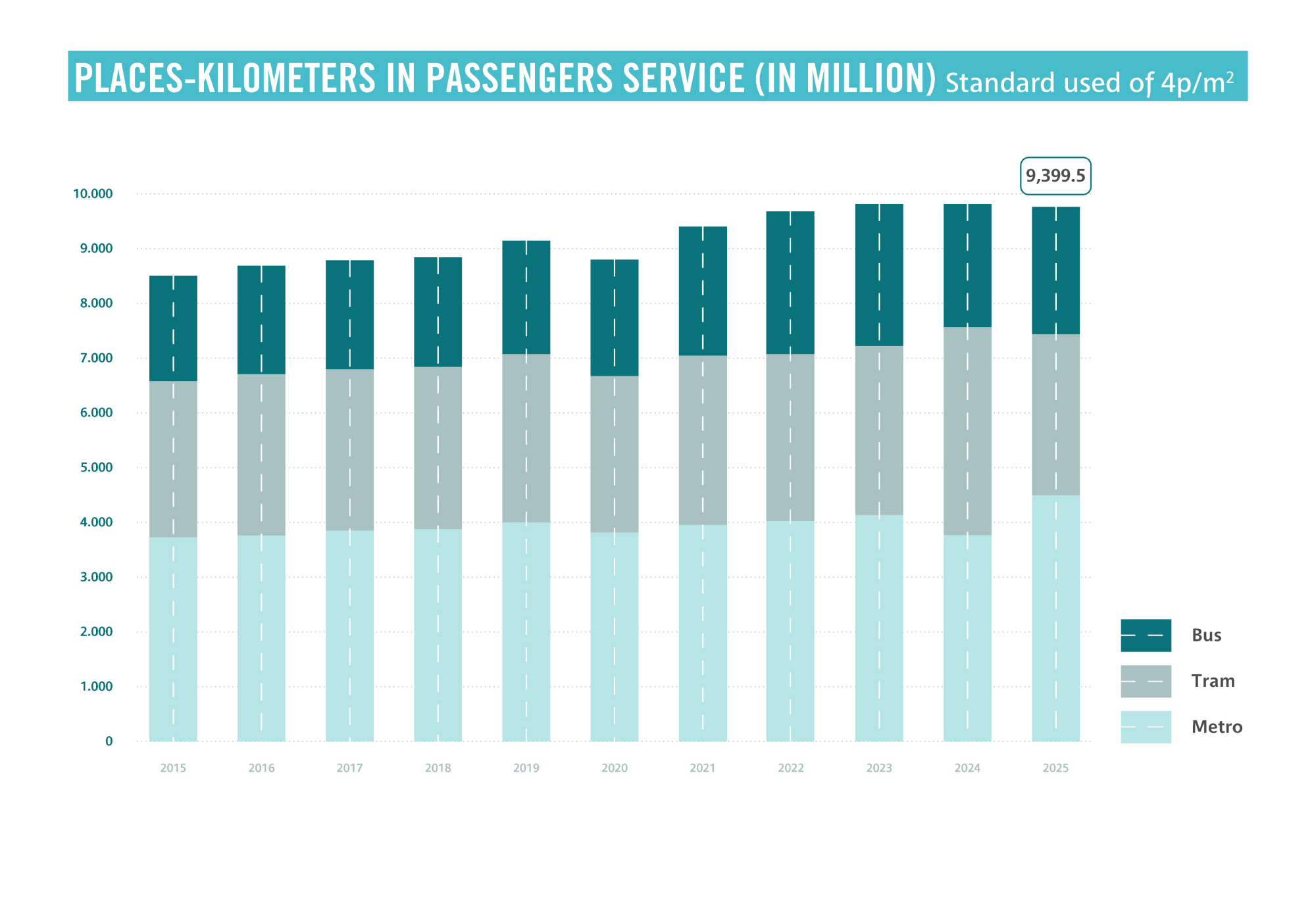
STIB vehicles travelled 51.3 million kilometres in 2025. The service offered to travellers, expressed in terms of the number of seats available on buses, trams and metros, multiplied by the number of kilometres travelled, amounted to 9.4 billion seats-kilometres in 2025. The slight decrease in kilometre production is partially offset by the modernisation of the vehicle fleet. The arrival of Trams New Generation and higher-capacity M7 metro trains contributes to offering more seats, greater comfort and an improved travel experience.
In 2026, various construction projects will once again impact kilometre production, but will help to maintain a safe and efficient network for years to come. For example, the Moris- Bréart construction project will resolve a very problematic black spot on the tram network. This route has a record number of interruptions due to improperly parked vehicles that prevent the tram from continuing on its route. Despite the temporary interruption of line 81, the expected benefits for travellers will be significant. At the same time, the STIB will continue its efforts to maintain an efficient and high-quality service for its customers, among other things by continuing to introduce new vehicles: TNG trams, M7 metro trains and new eCitaro fully electric buses.
Did you know?
Tickets at your fingertips
Digital ticket
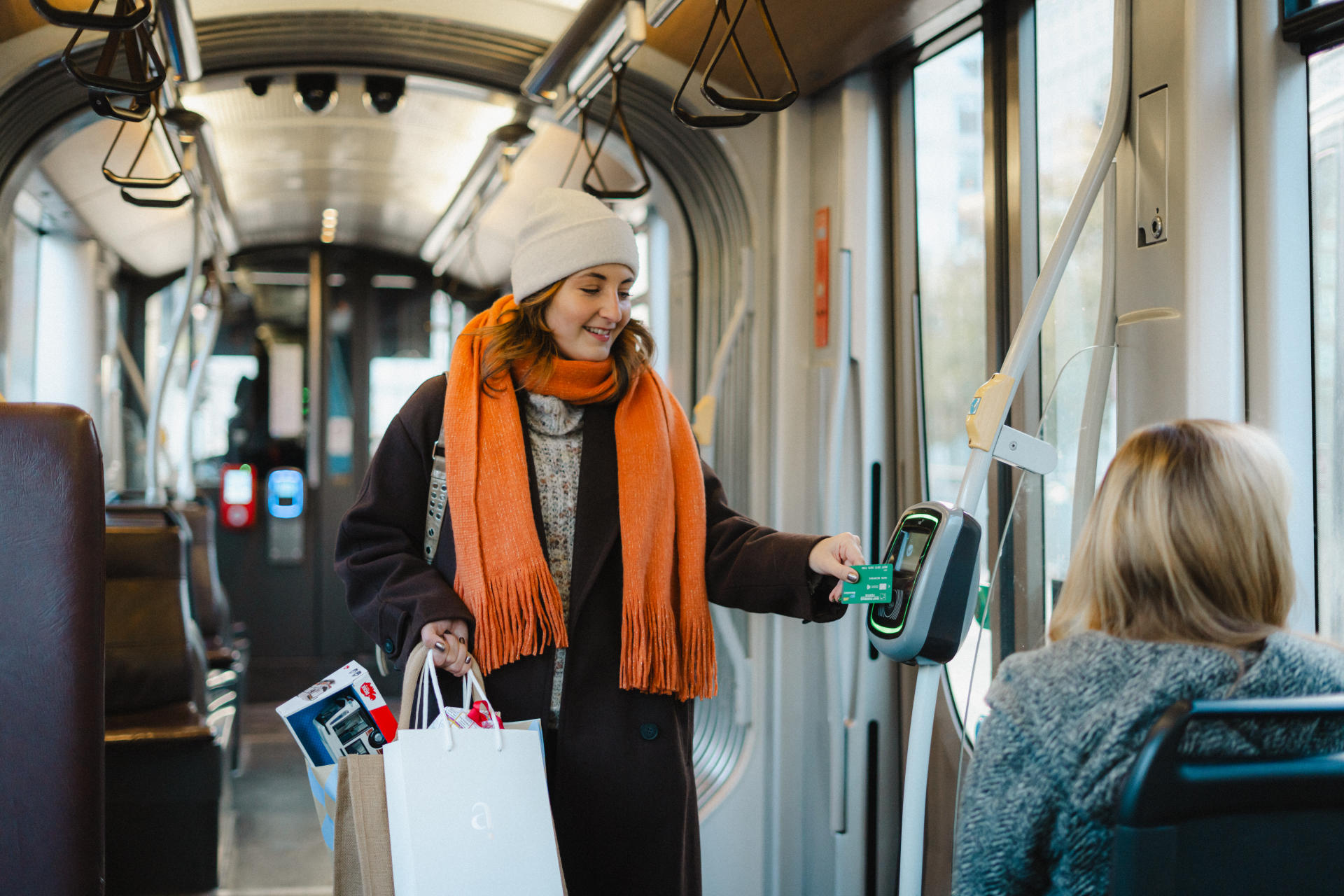
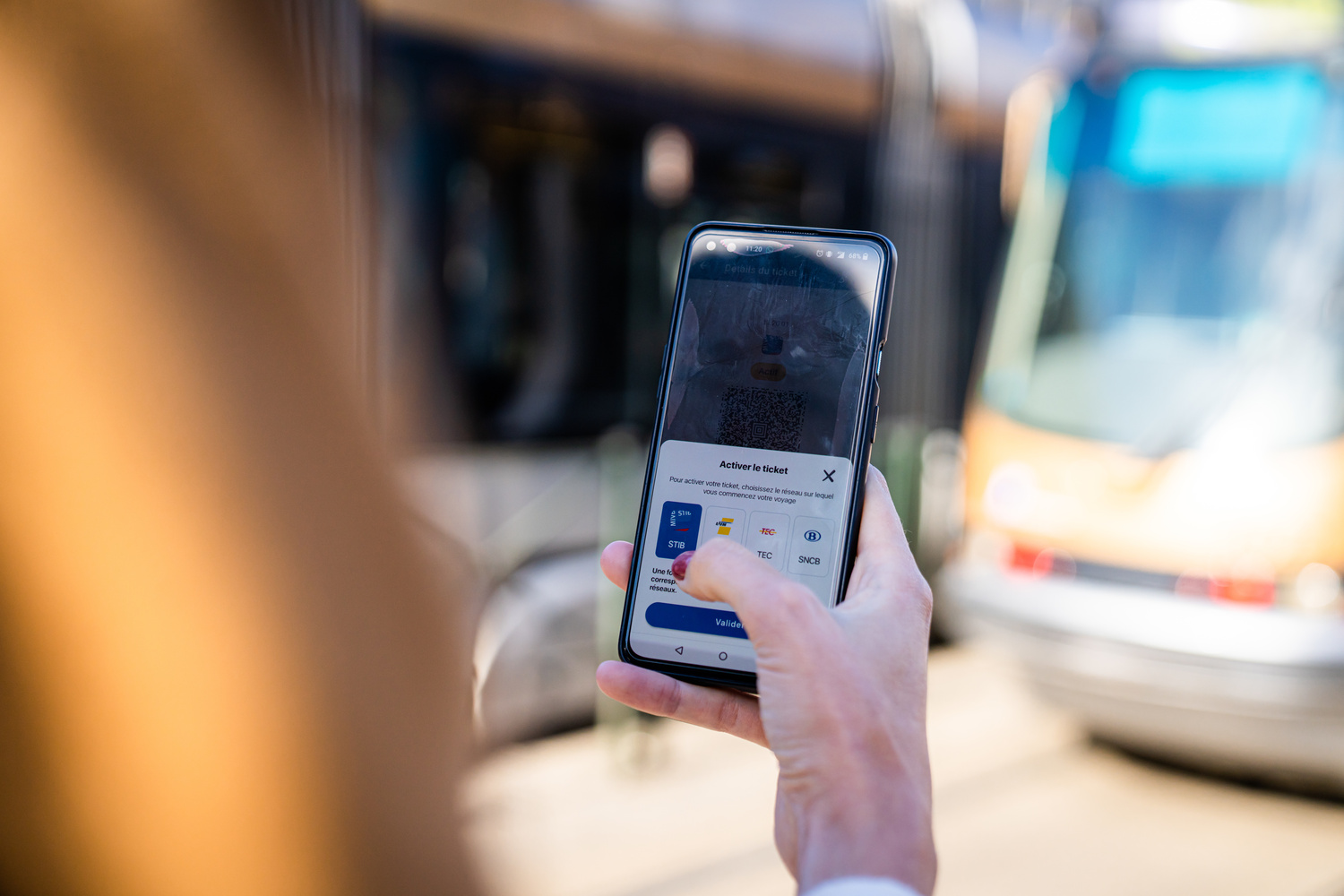
Since 14 November 2023, the STIB has offered the option to purchase and validate Brupass or Brupass XL tickets via its mobile app. Initially designed for single travellers, since May 2025 the digital ticket has allowed users to validate tickets for more than one person. By the end of 2025, nearly 245,000 passengers had made 3.2 million journeys with the digital ticket. The number of validations in the app reached nearly 1.8 million in 2025, which is 400,000 more than in 2024. These validations mainly concern the STIB (89.2%), but also the SNCB (6.9%), De Lijn (3.4%) and the LETEC (0.5%). Approximately 80% of validations are carried out in metro and pre-metro stations, where 572 QR code readers have been installed to allow passengers to pass through the gates.
According to a study conducted in 2024, the digital tickets scored 7.5/10 for overall satisfaction. These positive results reflect the ease of use, speed and time savings generated by this new dematerialised sales channel.
Contactless payment
Since the launch of payment by bank card on board vehicles and at stations in 2020, it is no longer necessary to buy a ticket in advance to take the metro, tram or bus in Brussels. In the year following its launch, contactless payment accounted for 3 million validations. In 2025, there were 14.5 million tickets paid for directly at the validator using a bank card, smartphone or other connected device, which is five times more. In total, 49 million tickets have been sold since the launch.
Contactless payment is very popular with travellers. In the latest satisfaction survey, it stood out with a score of 8.4 out of 10. It has also established itself as the preferred payment method for occasional travellers, with 64% of single tickets paid for in this way. The stations with the highest number of bank card validations are Gare du Midi, Louise and Schuman.
The system is particularly popular for tourism, business travel and attending events held in Brussels.
In order to further improve the customer experience, the STIB has revised the daily reserve amount from €8 (the price of a day pass) to €2.40, the price of a single journey. The exact number of journeys made continues to be calculated at the end of the day. This change addresses the main source of complaints about contactless payment: many customers were surprised to see €8 blocked on their account, which raised questions. After a successful test phase, the STIB has therefore adjusted the reserve amount to improve the customer experience.
Online purchase
The modernisation of the STIB website provided an opportunity to optimise online purchasing. The new sales platform, which is more intuitive and user-friendly, highlights new features such as digital tickets and contactless payment.
Online purchasing now offers:
- A clearer view of the different tickets available, with filters allowing users to customise the overview according to their needs
- A simplified purchasing process: in particular, it is possible to order a new MOBIB card and load tickets directly onto it.
- A maximum delay of 15 minutes between purchasing a ticket online and loading it onto a MOBIB card at a GO ticket machine
- A STIB account that allows users to manage their MOBIB cards, contactless payments, favourite lines and stops, receive personalised information and subscribe or unsubscribe from the newsletter
These improvements have boosted online sales, which have increased by 41% since the launch of the new website.
Floya
13.6 million route searches
Floya is the multimobility app developed by the STIB. It allows users to plan, pay and travel in Brussels with a single account. It brings together many mobility players: Belgian public transport operators STIB, SNCB, LETEC and De Lijn, shared scooters and bicycles, taxis and car sharing.
At the end of 2025, Floya had 11 partners with different levels of integration, more than 40,000 monthly users and 13.6 million route searches from the app during the year.
Users benefited from new features and improvements, including:
- Full integration of Villo!, which allows users to use shared bikes for 30-minute periods without the need for a subscription
- Full integration of Voi self-service shared bikes
- The development of passes for discounted travel with Bolt, Dott and Voi electric scooters and bikes

Cultural, musical and nightlife
The STIB contributes to Brussels' cultural vitality by facilitating access to the many events that take place in the capital. With special shuttles, increased frequency, and Event Passes available in collaboration with its partners (Ancienne Belgique, KVS and Forest National), the STIB is stepping up its initiatives to facilitate the use of public transport and allow people to enjoy Brussels' cultural, musical and nightlife in complete tranquillity.
In 2025, the STIB also brought Brussels to life directly on its network:
- The Tram Experience offered gastronomic tours aboard a historic tram converted into a restaurant
- A DJ took over a tram for an extraordinary set as part of the Hangar Festival
- Tram Vibes, the STIB's musical tram, welcomed the Brussels flow of artists Cage Vrije Verzen and Lady N
- The Christmas tram delighted young and old alike with the STIB choir announced the stops in song on several tram lines during the end-of-year celebrations
And during major events in the capital such as Couleur Café, Museum Night Fever, Hangar Festival, Jam'in Jette, Pride and the national holiday, passengers were able to count on extra services to get around and return home with peace of mind.
Inform travellers
New website
Designed for and with users in mind, the new STIB website focuses on the most frequently used features, namely real-time information, route search, timetable consultation, as well as information on tickets and online purchase.
This redesign was also an opportunity to improve accessibility for visually impaired people and those with hearing or motor disabilities. The site has now been awarded the AnySurfer label for two years.
Today, 80% of visits to the site are made via smartphone. That is why the new site has been designed with a “mobile first” approach, with simple and intuitive navigation, designed primarily for mobile phones.
Social media
STIBstories, the STIB blog, celebrates its 10th anniversary. Since 2015, it has been giving readers a behind-the-scenes look at the STIB network: prevention, innovation, organisation and development of the network... With nearly 700 articles, the blog attracts more than 9,000 readers every month. In 2025, the most-read articles were translated into English, in addition to the existing Dutch and French versions.
Already very active and popular on social media, STIB launched a new information channel on the instant messaging app WhatsApp at the end of 2024. Travellers who subscribe to it can follow news about STIB and its network. Since 2025, STIB has also been publishing real-time traffic information on the app to keep passengers informed in the event of major unscheduled disruptions.
The ‘Voyage, voyage’ podcast also takes listeners behind the scenes of the STIB and gives travellers a better understanding of the operational realities of a public transport network. Experts answer various questions that travellers may have. Among the topics covered in 2025: digital season tickets, tram priority, the Noctis service and lost and found items. The podcasts are available on Spotify, Apple Podcasts, Anchor and YouTube.
From practical messages to more offbeat videos, STIB's social media channels are attracting an ever-wider audience thanks to content that is both useful and quirky, riding the wave of current trends. At the end of 2025, they had:
- 151,694 followers on Facebook
- 42,068 followers on Instagram
- 44,272 followers on LinkedIn
- 24,900 followers on WhatsApp
- 4.6 million views on TikTok

Personalised information
Customer Care responds to travellers' concerns every day, both online and by telephone. At the end of 2025, the department acquired a new CRM (Customer Relationship Management) platform. This tool enables them to offer a more personalised service by taking previous exchanges into account and ensuring comprehensive follow-up of requests. The result is better quality support and increased user satisfaction.
In 2025, Customer Care handled 84,740 calls, 25,974 emails and 17,337 messages on Facebook and Instagram. These teams also handle bookings and follow-ups for TaxiBus, the door-to-door service for people with reduced mobility. 49,838 calls were handled in this context.

Quality of service
To assess the quality of its services, the STIB organised nearly 11,000 mystery shopper surveys in 2025. The mission of these incognito inspectors was to test key elements of the customer journey, such as vehicles, stations, stops, points of sale, as well as the website and mobile app. These surveys resulted in more than 500,000 measurements, covering criteria such as equipment availability, infrastructure cleanliness and client orientation. At the same time, real-time measurements are taken to assess the performance of other elements of the customer journey, such as escalators and punctuality. The results of the quality surveys are monitored on a monthly basis and make it possible to correct any anomalies detected.
“Quality of Service” certification
In spring 2025, an auditor appointed by the AFNOR certification body assessed the quality of the services offered by the STIB. Following this audit, the “Quality of Service” certification was renewed for a period of three years.
Several strengths were highlighted:
- The customer-focused approach at the heart of the new business plan
- The creation of the new ‘Customer’ division
- The quality of the training centres
- The consolidation of dispatching centres
- The customer experience enhanced by digitalisation, reliable information and the commitment of the teams
- Customer knowledge through the use of data: online counting, deployment of a CRM system and satisfaction surveys

The dynamic of continuous improvement
Service quality measures are constantly evolving. Through a process of continuous improvement, existing processes are regularly analysed, adapted and evaluated in order to measure their effectiveness and adjust them if necessary. At the same time, the scope of the services monitored and certified is also adapted to changes in the network and travellers' expectations.
Since January 2025, mystery shoppers in wheelchairs have been testing the accessibility of buses. In addition to checking the technical functioning of the access ramps, these checks also verify whether they are deployed in a manner that is suitable for wheelchair users. Nearly 90% of the measurements taken are positive. The main area for improvement identified concerns about the deployment of the ramp, which should be done before boarding other travellers to ensure greater comfort and speed. This procedure will be optimised in the next update of the bus operating guidelines.

Innovation workshops
Using the ‘design sprint’ technique, internal teams, sometimes assisted by external specialists, come up with innovative solutions to improve customer service. These ‘Innov@teliers’ take place over five consecutive days, during which teams analyse a problem and devise solutions, create a prototype and test it with customers. This method makes it possible to quickly identify projects with potential and focus on initiatives that offer real added value for customers.
Since its launch in 2021, the innov@telier has supported 33 cross-functional teams made up of colleagues and partners. Of the 33 topics addressed by innov@telier, 30% concerned customers, 29% colleagues (Talents) and 41% the sustainability — and in particular the operational performance — of the STIB. Nearly 50% of the innovation topics supported have led to concrete implementation. For example:
- Brupass Digital: this project, which resulted in a digital version of the Brupass and Brupass XL tickets in the STIB mobile app, was initiated by a design sprint bringing together Belgium's four public transport operators — SNCB, De Lijn, LETEC, and the STIB.
- Refresh Station: this process optimises existing resources dedicated to the maintenance and upkeep of metro stations. The Porte de Namur, Osseghem, Diamant, Stockel and Maelbeek stations have already benefited from it. Studies are underway for Delta and Hermann-Debroux. The Refresh Station programme tangibly improves comfort, safety and clarity for passengers. After the refresh of the Porte de Namur station, the overall satisfaction rate of its users rose from 4.97 to 6.53/10.
- DeviMap: this project has provided bus drivers with an online application offering accurate mapping of diversions, in order to make journeys safer, avoid errors and guarantee a better service for travellers, even in unforeseen situations.
- Wall-E: this project brought together the Bus, Tram, Metro, Security and Customer Information dispatching centres to optimise processes and design a new digital tool, resulting in a 5-minute reduction in the time taken to inform passengers in the event of unscheduled disruptions.
In 2026, the STIB will enter a new phase of maturity in artificial intelligence (AI), moving from experimentation to industrialisation. The year will be marked by the establishment of structured AI governance, the deployment of an AI Centre of Excellence and the launch of high-impact AI projects, particularly in terms of operational efficiency, customer experience and business support. At the same time, the STIB will invest in skills development in order to embed AI in its key processes in a sustainable manner, in compliance with ethical, regulatory and security requirements.
Next chapter
-
Company
The STIB works hard every day to offer a high-quality service and a sustainable alternative.