Construction site of tram 10 in Neder-Over-Heembeek
Highlights one year after the inauguration
Published on
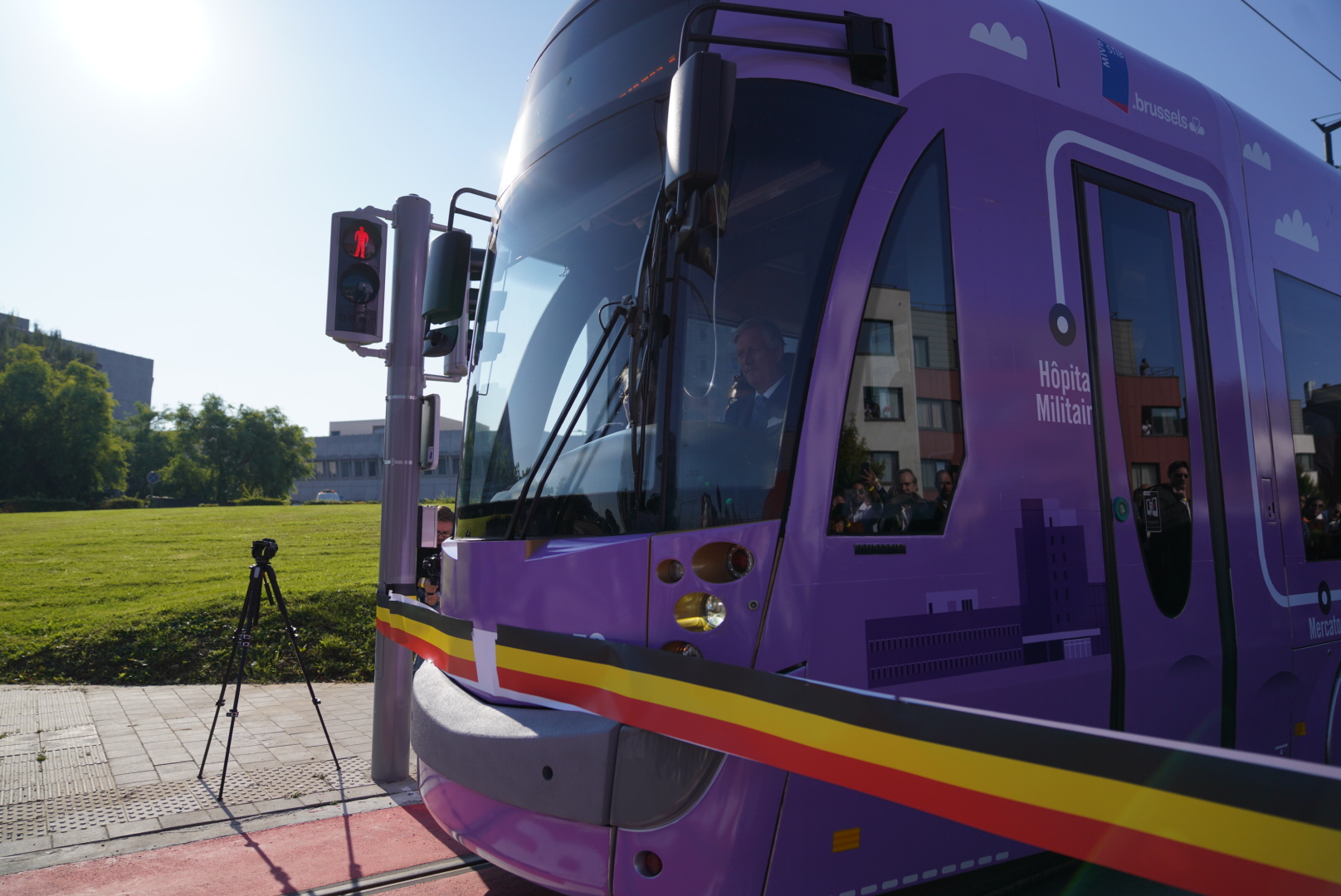
One year ago, we celebrated the inauguration of tram line 10: an ambitious project aiming to improve mobility in Brussels. Behind this success are months of hard work, technical challenges and efforts to reduce the impact of the works on the city and its inhabitants.

Technical challenges
It is undeniable that the construction of a new tram line is a true engineering challenge: Placing the tracks, installing the overhead lines, providing a power supply... Every stage required specialised expertise and perfect coordination between teams.
Join us behind the scenes in these videos (available only in French and Dutch):
- Track types in Neder-Over-Heembeek – An overview of the different types of infrastructure
- Use of prefabricated tracks - How these tracks help to accelerate construction while maintaining a durable structure
- Use of monoblock tracks - A different technique used to stabilize the track layout
- Overhead lines – Installation of overhead lines, which are essential for the power supply of the tram
- The role of substations – How energy is distributed to assure a continuous service
- Final preparations of the tram – The final tests before the official inauguration
- Overview of the works – A short video summary of the project
Thanks to these innovations, line 10 provides a trustworthy and high-quality service.
Reduction of the impact of the works
Works of this size inevitably cause inconvenience to the urban environment: to the city life, to shops, to traffic. From the outset, we made efforts to minimise disruption as much as possible and to fully integrate the tram in everyday life. Have a look at the measures in these videos (only available in French and Dutch) :
- Nuisance caused by the works – An explanation on the stages of the project and the management of inconveniences for the residents
- The inauguration of the line – A throwback to the grand opening and the first impressions of the passengers
- A participatory process and a wall painting - When street-art becomes a part of the project to brighten the neighbourhood
- A green road: from a wasteland to a linear park - An urban development project that benefits everyone
These initiatives have supported local residents and integrated the tram into a broader urban transformation dynamic.
A green project
Line 10 is not only focused on transport, but it also aims for an environmentally friendly approach, by integrating innovative solutions to reduce its environmental footprint (the videos are currently available in French and Dutch):
- Use of soundproofing mats – A solution to limit noise
- What is a draining area? - An explanation of this technique, which allows for a better infiltration of rainwater
- What is a landscape swale? – A natural approach to water management
- Reusing materials – How the materials of the construction site have been recycled
- Use of local materials – A reduction of the carbon footprint thanks to local suppliers
- Choice of trees and plants - A selection of plants to improve urban biodiversity
Thanks to these initiatives, tram 10 is more than a means of transport: it is a key element of the durable city of tomorrow.
And now?
Line 10 has already convinced a lot of you and the number of passengers on this line is steadily increasing. Coming from Neder-Over-Heembeek, this tram line allows you to quickly reach the city center. For example, the journey from Peter Benoit to De Brouckère only takes 23 minutes, without having to change.
On weekdays, the new tram connection Heembeek - Hôpital Militaire/Militair Hospitaal is used about 12,500 times each day.
Line 10 runs very frequently: you can catch a tram every 5 minutes during peak hours. You can also travel very comfortably: T4000 vehicles have 252 seats. On top of that, the journey is much faster: the average speed of line 10 is 19.2 km/h. That’s faster than most trams on the network (about 16 km/h).
Subscribe to our newsletter
Would you like to get STIB-MIVB tips, information about our network or a look behind the scenes in your mailbox? Subscribe to our biweekly newsletter!