
My role as a witness
Published on
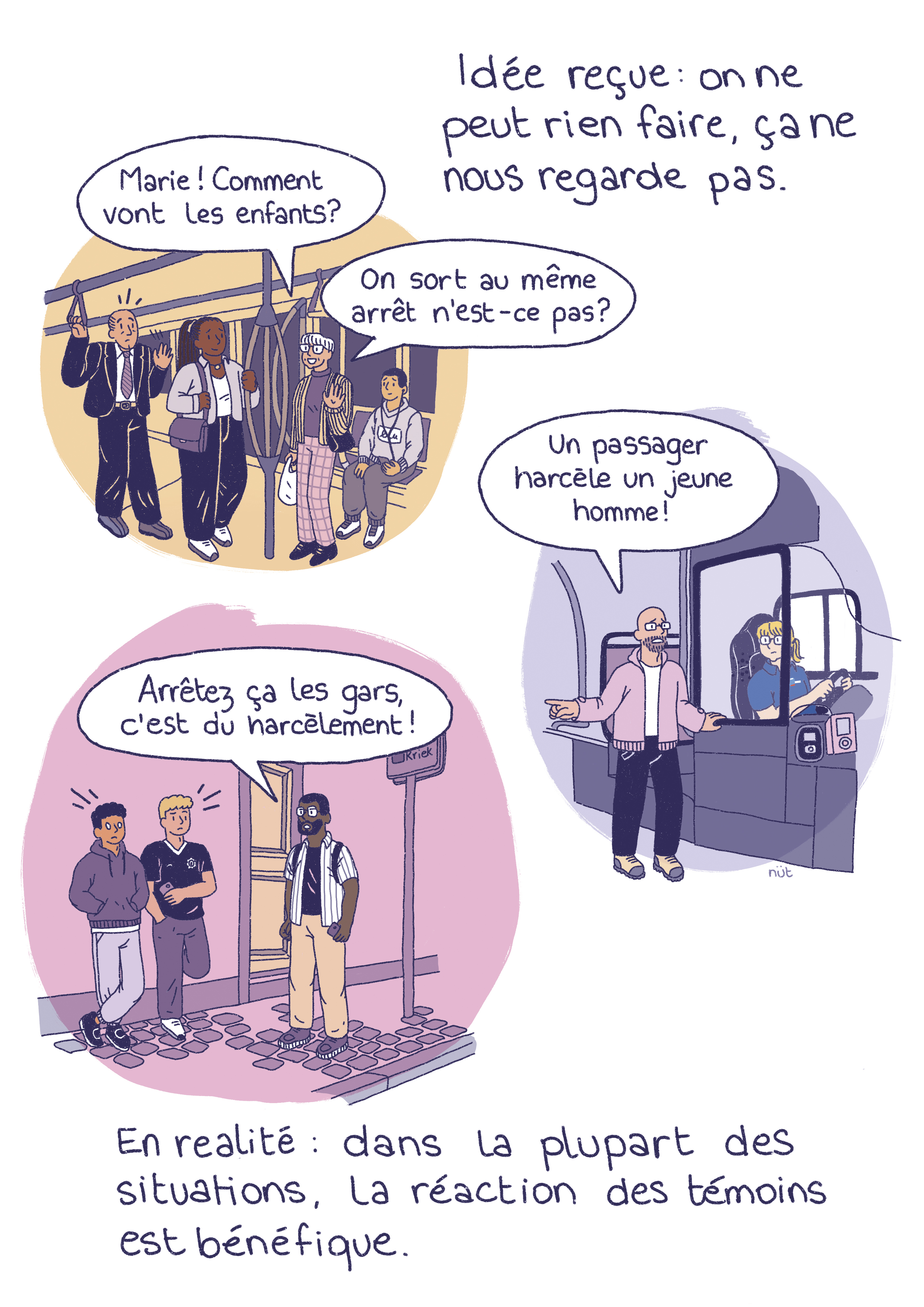
Be an ally: simple ways to support someone facing harassment
Witness: how to recognise situations of harassment
There is no “typical” harasser. Harassing behaviour can come from anyone, regardless of age, gender, or background. Avoid preconceived ideas: the key is to pay attention and observe how people behave, rather than judge based on appearance.
If you want to intervene and help prevent harassment on public transport, it’s important to watch out for certain signs and behaviours.
If you notice any of the following
From the person harassing:
- Persistent staring or intimidation: prolonged, intimidating stares can create discomfort. For example, someone glaring at another passenger in a threatening way.
- Attempt to isolate: someone blocking the victim, steering them away from other passengers, or leading them to a place from which they cannot escape.
- Verbal aggression: aggressive or inappropriate comments, unpleasant remarks.
- Unwanted touching: any physical contact that appears to be unwelcome.
From the victim:
Body language and non-verbal cues: signs of distress, attempts at non-verbal communication, discomfort, nervousness, or an attempt to move away.
If you notice one or more of these situations, it is essential to act.
Witness: how to react
Our tips for responding effectively. We can all take action, using a few basic reflexes and simple gestures :

Distract: pretend you know the person being harassed, ask for the time, or create a distraction. Be creative.

Delegate: find someone who represents a form of authority and ask them to help you intervene.

Document: discreetly record the scene and offer the victim the footage or propose to testify.

Delay: comfort the person afterwards, tell them that what they experienced is unacceptable, and act like a friend (without physical contact).

Direct: ask the harasser to stop, reassure the victim, or call for help (while avoiding direct confrontation).
For more information
Take a stand against harassment! Join the STAND UP – Touche PAS à ma POTE program on tpamp.be
Video 5D method
Simple steps, big impact! Eva Longoria walks you through the 5D Method to stand up against harassment.

Witness: What to do in case of an assault?

Call 101 (Police)
If the victim is injured or in shock, call 112 immediately for medical assistance.
Seek help from STIB-MIVB agents (even just to report the incident) or use an emergency button

Deaf, hard-of-hearing or speech-impaired victims or witnesses can use the 112 app
Press charges
As a witness, you can offer to accompany the victim to file a police report or offer to provide a written statement, specifying the place, date, circumstances, and people present, and give them your contact details.
What you need to know about sexism
-

I'm a victim – What can I do?
Victim of harassment or aggression? Act, report it or ask for help.
-
What is harassing behaviour?
Sexual violence and harassment cross personal boundaries: verbal, visual, or physical.
-

What does the law say?
Sexist violence: the forms and what the law says.
-

Our commitment in action
Standing up against harassment: discover our actions.